22 years focusing on research and production of natural herbal efficacy cosmetics
23 Years of Whitening and Anti-aging Cosmetics Source Factory
OEM/ODM Processing
E-commerce, Wechat business, influencers, direct sales teams, physical supermarkets, beauty chain institutions, foreign trade companies, global one-stop brand customized processing product solution service platform

19th Year
Wealth Hotline:
How to Choose a OEM Cosmetics Factory in 2025? Mingyu Cosmetics’ Three-Step Guide to Avoiding Pitfalls to Help You Get Off to a Strong Start
Release Date:
2025-10-21 17:18

“High minimum order quantities, non-refundable sampling fees, two-month delays in registration approval, discrepancies between the bulk production and the sample in terms of scent and formulation, and sudden claims of raw-material shortages from the factory after a livestream surge in orders…” These are common pitfalls that at least half of new brands will encounter. Choosing the wrong manufacturer can render an entire year’s effort futile; only by partnering with the right one can you consistently launch hit products that drive repeat business. So how do you select a reliable OEM/ODM cosmetics manufacturer?
I. Three Practical Tips for Choosing a Private-Label Cosmetics Manufacturer
1. Prioritize “filing speed” over “quote level.” The filing cycle is equivalent to the time-to-market cycle. If a manufacturer can consistently keep non-special-use product filings within approximately 15 working days, it generally indicates that its regulatory affairs, testing, and documentation teams operate in a closed-loop, integrated manner, minimizing the risk of being flagged during random inspections or ordered to make corrective adjustments that could stall the entire process.
2. Next, consider whether the manufacturer is willing to produce small batches for sampling. Anyone with real supply-chain experience knows that an initial trial run of 500 units is designed to gauge channel feedback and identify firm demand. Factories that are open to accepting small orders under 5,000 units and clearly state in their pricing that “the sampling fee can be credited toward the order payment” typically have strong confidence in the stability of their formulation.
3. Finally, consider the “raw-material backdrop.” Factories that once engaged in raw-material trading before transitioning to production can reduce costs by 10%–20% for the same quality when price hikes occur. In the broader context of across-the-board price increases for efficacy evaluations and preservative-challenge testing in 2025, this factor directly determines your end-product gross margin.
II. Why Are More and More Brands Listing Mingyu Cosmetics as Their “Preferred OEM Manufacturer for Private-Label Cosmetics” in 2025?
1. 2022: Raw-material DNA + intelligent production lines—costs and delivery are both under control.
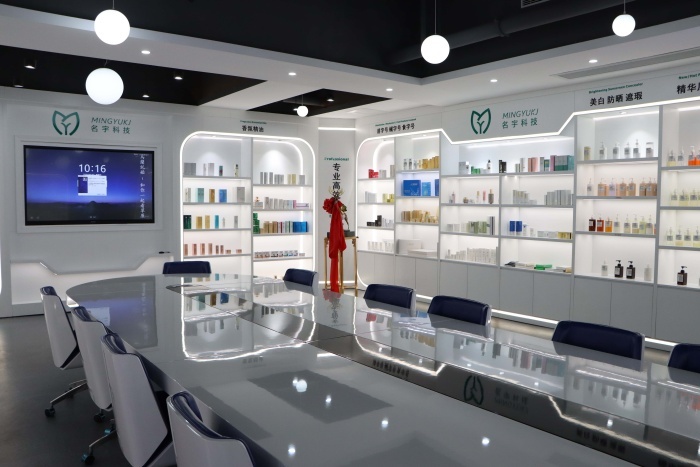
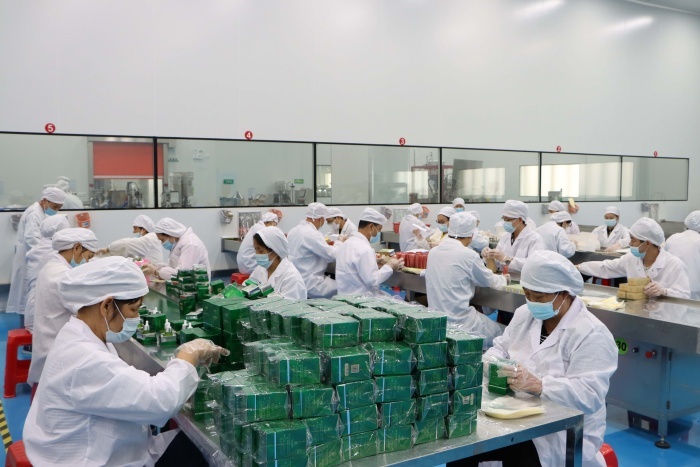
In 2003, Mingyu entered the industry by focusing on raw-material trading and has since maintained a dedicated Raw-Material Procurement Division within the group. Leveraging its upstream cost advantages and operating a nearly 20,000-square-meter GMPC-certified smart manufacturing facility with a daily production capacity of 500,000 units, Mingyu can deliver standard packaging materials to customers within 7–15 days of receipt at the factory. In today’s “fast-in, fast-out” livestream e-commerce landscape, delivery speed is the key driver of traffic-driven growth.
2. Even small orders qualify for the “Fast-Track Filing Channel,” saving an average of 7 days.
NameYu’s internal pre-review pass rate exceeds 95%, and non-special-filed registrations can obtain electronic certificates in as few as 12 working days. For new brands, launching just one week earlier can secure an additional influencer booking slot.
3. Formulations can be “ported with certification,” enabling one-click reuse of special certifications, patents, and efficacy reports.
The factory holds more than ten national special cosmetic registration certificates for whitening, spot-removal, and sun protection, as well as multiple authorized invention patents covering eye creams, whitening, and spot-lightening products. This enables clients to bypass the two-year application cycle and, building on existing special certificates, make fine-tuned adjustments to color, fragrance, and active ingredient concentrations—ensuring compliance while achieving product differentiation and avoiding cutthroat price competition driven by homogeneity.
III. Keep the complexity for ourselves; deliver simplicity to our clients.
From free sample production and small-batch custom orders of 5,000 units, to outsourced procurement of packaging materials, agency submission for inspection and registration, and global warehousing and logistics—Mingyu has modularized the entire value chain. Customers simply select the services they need, much like assembling building blocks, to seamlessly move from concept to finished product. In 2025, as channel fragmentation intensifies, brands will increasingly prioritize lean, agile operations over heavy capital investments in factory construction.
Summary:
When selecting a private-label cosmetics manufacturer, you’re essentially choosing a partner who can turn your creative vision into a market-ready product—on time, to the highest quality standards, and within your budget. Use registration-speed metrics to weed out procrastination; leverage small-order flexibility to validate market demand; and rely on the supplier’s raw-material pedigree to secure profit margins. Then set your sights on Mingyu Cosmetics—a well-established factory with deep expertise in raw materials, a robust inventory of certified ingredients, and the confidence to take on small orders. This could be the certainty you need to capitalize on in 2025.
Cosmetic OEM,Source Factory,Cosmetics,Mingyu Cosmetics
Related News



Get a free customized solution immediately
Professional cosmetics OEM manager will tailor and provide a full range of contract manufacturing
Contact Information
-
Wealth Hotline:13902401468
-
Processing Hotline:13825199612
-
Business Contact Address: Room 416, Baiyun Shiguang, Baiyun District, Guangzhou
-
New Factory Address: Building 4, No. 19, Lixin 9th Road, Zengcheng District, Guangzhou
Follow Mingyu WeChat Official Account
©2024 Guangzhou Mingyu Cosmetics Manufacturing Co., Ltd. All rights reserved