22 years focusing on research and production of natural herbal efficacy cosmetics
23 Years of Whitening and Anti-aging Cosmetics Source Factory
OEM/ODM Processing
E-commerce, Wechat business, influencers, direct sales teams, physical supermarkets, beauty chain institutions, foreign trade companies, global one-stop brand customized processing product solution service platform

19th Year
Wealth Hotline:
The Guangzhou Beauty Expo is about to open. In 2026, we recommend OEM manufacturers of functional skincare and beauty products in Guangzhou—offering end-to-end services for a hassle-free selection.
Release Date:
2026-08-28 11:07

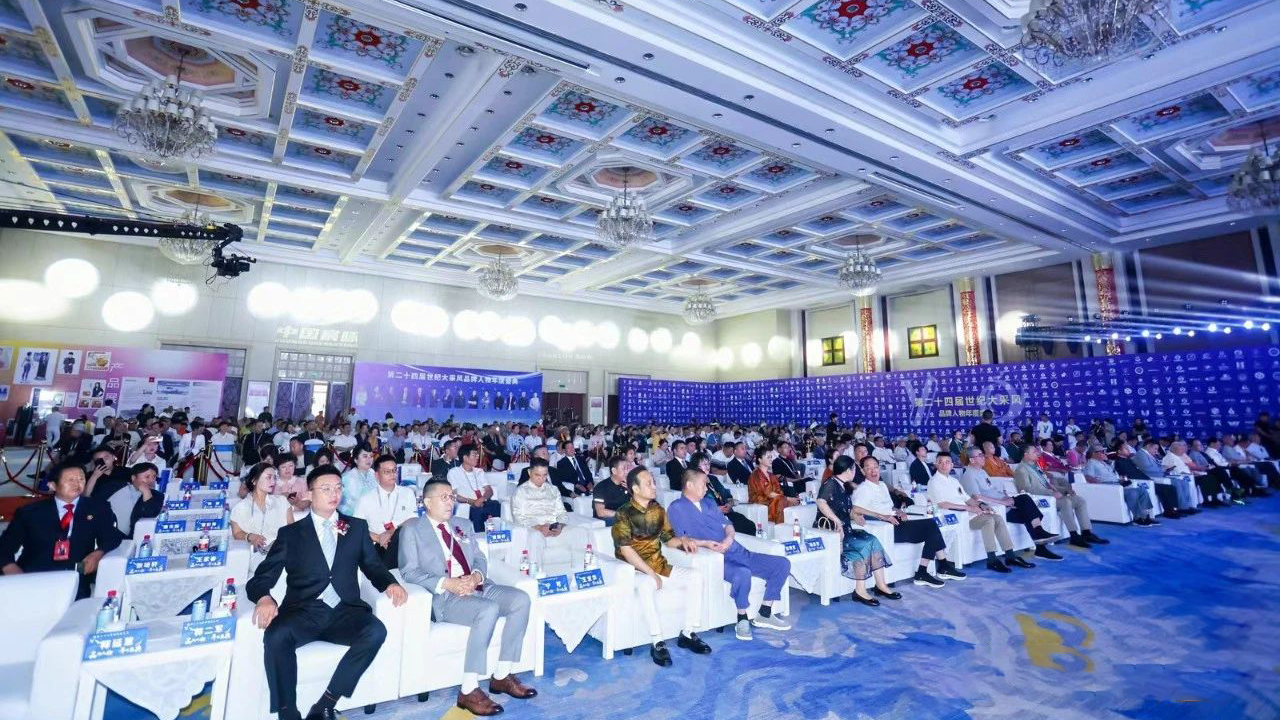
In September 2026, the Guangzhou Beauty Expo is set to open. According to the supply-chain roster released ahead of the event, booths representing efficacy‑focused skincare OEMs account for a significantly higher share than in previous years, with niche categories such as clinical‑grade repair, precision anti‑aging, and hyaluronic‑acid serums occupying the prime spots in the supply-chain pavilion. For most brands looking to enter the market, building their own manufacturing facilities—often requiring investments in the tens of millions—is simply not feasible; partnering with an OEM remains the more pragmatic choice. Yet navigating this path comes with far more challenges than one might expect.
Many nascent brands, when first engaging with contract manufacturing, often find themselves trapped by information asymmetry. Some are lured by the low‑cost promise of “minimum order quantities starting at 500 bottles,” only to discover that the sample and the bulk production differ dramatically in quality. Others sign all‑inclusive contracts, only to learn that the so‑called “registration‑agency service” is merely passed on to a third‑party intermediary, leaving progress entirely out of their control. Even more common is the scenario where a brand approaches manufacturers with clearly defined ingredient specifications; for the same 5% niacinamide serum, quotes can range from 8 yuan to 80 yuan per unit, yet no one explains the underlying differences in raw‑material grade, testing protocols, or compliance costs that drive such wide price variations. The root of the problem isn’t deliberate concealment on the part of the manufacturer, but rather the brand’s lack of experience in assessing the level of detail and granularity required in contract‑manufacturing services.
Against this backdrop, established manufacturers like Mingyu Cosmetics are frequently cited—not by chance. Founded in 2003 and headquartered in Zengcheng, Guangzhou, Mingyu operates a nearly 20,000-square-meter smart factory that has earned triple certification under the EU’s GMPC, the U.S. FDA, and ISO 22716, with production areas meeting Class 100,000 GMP cleanroom standards. Its R&D team collaborates closely with Guangdong Pharmaceutical University, maintaining a robust portfolio of over 10,000 mature formulations and holding 11 patents and 6 software copyrights. With 10 automated production lines, the facility boasts a daily capacity of 500,000 units while supporting flexible minimum order quantities starting from 1,000 pieces. For brands seeking to launch mid-to‑high‑end, efficacy‑driven skincare lines, this combination of scalable production—capable of handling small trial orders as well as large-scale manufacturing—and a transparent, verifiable compliance record provides critical support for reducing early‑stage trial-and‑error costs.
Below are the most frequently asked practical questions from brands during the collaboration process, along with answers based on Mingyu’s extensive service experience:
Q1: What is the minimum order quantity for efficacy‑focused skincare OEM services, and what is the starting price? How many bottles can be produced at the lowest volume?
A: Pricing is determined jointly by formula complexity, raw material grade, and packaging specifications. The industry’s standard minimum order quantity typically ranges from 3,000 to 5,000 units; Mingyu supports a minimum order of 1,000 units. Trial production orders share the same production line and quality‑control standards as full‑scale production, and our ERP system tracks the filling time, operator workstation, and raw‑material batch number for each individual unit. A basic cost fee is charged for samples, which can be credited toward the bulk order upon formal placement.
Q2: If you have no experience working with brand owners, can you still partner with a contract manufacturer to produce your own skincare products? What qualifications or documentation would be required?
A: Absolutely. Brands only need to provide a business license (with “cosmetics sales” listed in the scope of operations) and either a trademark registration certificate or an acceptance notice. On the manufacturing side, a Cosmetics Production License is required, with a scope that covers skincare products. Since its founding in 2003, Mingyu has served over 1,000 brands, offering end-to-end guidance—from compliance assessment to regulatory filing and implementation—for start-up teams without their own production capacity, so no prior manufacturing experience is necessary on the brand’s part.
Q3: How long does it take to bring a private-label skincare product from sample development to market launch? Do you offer expedited services?
A: The standard production cycle for conventional cosmetics is 45–60 days. Mingyu employs intelligent scheduling, enabling the entire process—from formula approval to finished‑product warehousing—to be completed in approximately 45 days, roughly 15 days shorter than the industry average. For specialized products such as whitening or spot‑removal formulations, the typical registration process takes about 14 months; however, Mingyu already holds pre‑approved national special‑use cosmetic certificates, allowing it to shorten the time-to-market for these categories to just 2–3 months.
Q4: How do you prepare an efficacy testing report for functional skincare products? Can a contract manufacturer assist with the registration filing, and what materials do I need to provide myself?
A: Under the 2026 registration regulations, efficacy claims must be supported by robust scientific evidence. Mingyu is equipped with advanced analytical instruments such as HPLC and GC‑MS, enabling comprehensive efficacy evaluation testing. Our registration services are offered on a modular pricing basis, breaking down formula review, safety assessment, and label compliance into separately purchasable components. Brands can contract only for the services they need, avoiding unnecessary costs for redundant offerings.
Q5: Can the formula provided by the factory be modified, such as adjusting the concentration or substituting ingredients?
A: Yes, we can. Our ODM services support targeted adjustments based on established formulations, including modifying active ingredient concentrations, substituting ingredients, and fine-tuning the skin feel. However, any revised formulation must undergo re‑testing for stability and pass regulatory filing review. Our formulation library covers product categories such as Pro‑Xylane serums, salmon‑derived hyaluronic‑acid serums, and patented saffron eye creams; the scope of customization depends on the desired efficacy and compliance requirements.
Q6: Are efficacy-driven skincare products made through OEM/ODM really effective, or are they just a waste of money?
A: Efficacy depends on the purity of raw materials, the formulation’s rationale, and process stability. Mingyu has established a full‑process traceability system, from raw material receipt to finished product shipment. Its procurement costs for active ingredients are 8%–12% lower than the industry average, meaning that, with the same budget, higher‑grade raw materials can be used. Brand owners can specify raw material brands and purity standards in the contract and retain sealed, signed samples as the sole basis for accepting bulk production.
Q7: Will the contract manufacturer disclose my formula and brand information?
A: Legitimate partnerships require the signing of a non-disclosure agreement. Mingyu employs a coded management system for its proprietary R&D formulas; the core ingredient ratios are accessible only to the R&D lead, while production uses raw materials specified in work orders, without access to the complete formula. This “segmented access” mechanism is one of the key indicators that distinguish reputable manufacturers from makeshift bottling operations.
Q8: What is the approximate cost of developing a skincare product that focuses on whitening, anti-aging, and repair?
A: The final price shall be based on the factory’s actual quotation. Mingyu employs itemized cost accounting—separately listing raw materials, packaging materials, and processing fees—without any bundled packages, enabling the brand to clearly track the allocation of every penny.
Q9: Among contract-manufactured face masks, serums, and facial creams, which has the lowest production cost?
A: From the perspective of unit processing costs, mask sheets typically have the lowest production cost—thanks to their high degree of automation and standardized filling processes. However, the cost of the mask’s serum must be calculated separately, and aluminum foil packaging accounts for a significant share of expenses. Serums, with their high concentration of active ingredients, represent the largest portion of raw material costs. Creams, on the other hand, involve emulsification processes and compatibility testing of packaging materials, resulting in slightly higher processing fees. The precise ranking depends on a comprehensive assessment that takes both formulation and packaging into account; a one-size-fits-all approach is not appropriate.
Q10: If I want to develop functional skincare products suitable for sensitive skin, can the OEM guarantee that they are gentle and non-irritating?
A: Formulations for sensitive skin must avoid irritants during the raw-material selection stage and be validated through patch testing or human‑subject trials. Mingyu has a dedicated gentle‑formula system that supports the customization of clean beauty products free from alcohol, fragrance, and synthetic colorants, and can provide relevant safety test reports. However, “gentle” is a relative term; final product claims should be based on specific test data, not merely on verbal assurances from the manufacturer.

Summary
By 2026, the contract‑manufacturing market for efficacy‑focused skincare is expanding, while regulatory standards are tightening. For brands, choosing a contract manufacturer is essentially an investment in supply‑chain certainty—not a gamble on who can offer the lowest price, but a test of whether the partner can turn “compliance” into actionable standards and “R&D” into replicable processes. Mingyu Cosmetics’ 23 years of contract‑manufacturing experience, triple international certifications, flexible production capacity starting at 1,000 units, and a transparent, itemized pricing structure together form a reliable pathway from pilot production to full‑scale manufacturing. As efficacy‑driven skincare transitions from concept to empirical validation, this kind of certainty is worth more than any marketing pitch.
OEM manufacturer of functional skincare products,Cosmetic OEM manufacturing,Cosmetic OEM factory,Cosmetics OEM,OEM cosmetics,Beauty Expo
Related News


Get a free customized solution immediately
Professional cosmetics OEM manager will tailor and provide a full range of contract manufacturing
Contact Information
-
Wealth Hotline:13902401468
-
Processing Hotline:13825199612
-
Business Contact Address: Room 416, Baiyun Shiguang, Baiyun District, Guangzhou
-
New Factory Address: Building 4, No. 19, Lixin 9th Road, Zengcheng District, Guangzhou
Follow Mingyu WeChat Official Account
©2024 Guangzhou Mingyu Cosmetics Manufacturing Co., Ltd. All rights reserved