22 years focusing on research and production of natural herbal efficacy cosmetics
23 Years of Whitening and Anti-aging Cosmetics Source Factory
OEM/ODM Processing
E-commerce, Wechat business, influencers, direct sales teams, physical supermarkets, beauty chain institutions, foreign trade companies, global one-stop brand customized processing product solution service platform

19th Year
Wealth Hotline:
2025 Comprehensive Guide to OEM Cosmetics Manufacturing: Procedures, Small-Batch Production, and Pitfall-Avoidance Strategies
Release Date:
2025-08-12 14:46

I. Core Documents That the Brand Must Prepare
1. Business License
No restrictions on type: both corporate and individual licenses are accepted; licenses from Mainland China, Hong Kong, and overseas are equally acceptable.
The business scope must include the phrase “cosmetics sales/contract manufacturing”; otherwise, subsequent trademark registration and filing will not be possible.
No license required—agency services available: local agents can obtain the license in about RMB 2,000 within 15 working days.
2. Trademark (Brand)
License First, Trademark Later: A business license must be obtained before registering a trademark.
There are three ways to obtain a TM: self-registration (approximately 20 working days), agency registration, or purchasing/obtaining authorization for another party’s trademark. Note that in some regions, the local drug administration does not accept TM filings.
3. Contract for Processing on Commission and Power of Attorney
Enter into a Cosmetic OEM Agreement and a Production Entrustment Letter with the manufacturer, clearly specifying the formulation, quantity, quality standards, delivery schedule, after-sales service provisions, and confidentiality clauses.
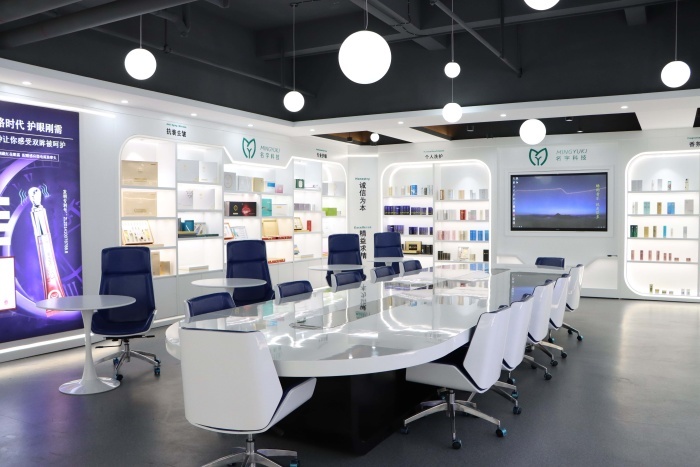
II. Cosmetic OEM factory Required Qualifications
1. Business license (to certify the legal status of the enterprise).
2. Cosmetic manufacturing license (GMP certification), with the intended product categories falling within the scope of the licensed unit: for example, men’s shampoo must be classified under the “General Liquid Unit,” and sunscreen spray must be classified under the “Aerosol Unit.”
3. Inspection Reports: In some regions, regulatory authorities require the submission of third-party authoritative testing reports (covering microbiological parameters, heavy metals, etc.) as part of the filing documentation.
III. Feasibility and Recommendations for Small-Batch Production
1. Quantity Threshold
Tens-of-thousands-level orders: The vast majority of factories do not accept such orders; you can try consolidating orders, but the process is highly challenging.
Several hundred units: Many factories now offer flexible order fulfillment, making this ideal for start-up brands to test product demand.
2. Advantages of Small Batches
Low-cost market testing: minimal financial pressure and rapid validation of market feedback.
Flexible inventory management: By leveraging pre-sales and franchising models, inventory risk is reduced.
3. Cost Reminder
Fixed costs such as packaging, color boxes, and sample production cannot be spread over a larger volume, leading to a significant increase in the per-bottle cost; therefore, profit margins must be calculated in advance.
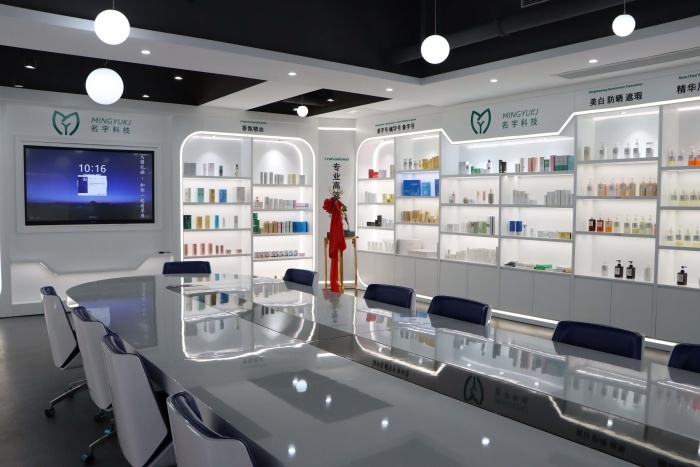
IV. Finding Reliability Cosmetic OEM factory The 3 paths
1. Online platforms: Baidu, Alibaba, and Aigoucai—search for “ Cosmetic OEM “First, screen factories online based on size, product portfolio, and certifications.”
2. In-person trade shows: Attend events such as the Beauty Expo and Raw Materials Exhibition to engage in face-to-face discussions with manufacturers and obtain the latest sample information and policy updates.
3. On-site Inspection: Focus on assessing workshop cleanliness, R&D laboratories, production capacity, quality documentation, and past customer case studies; verify that the factory address, facility size, and staffing levels are consistent with the information provided on the company’s official website.
V. Common Risks and Tips for Avoiding Pitfalls
Low-price lure from illegal workshops: Operating without a production license is a violation, and products can be seized at any time.
Trademark squatting: Once a brand name is finalized, trademark registration should be filed immediately to prevent marketing investments from going to waste.
Lack of contract details: Clearly specify provisions for returns and exchanges of nonconforming products, compensation for delays, and confidentiality of the formulation to avoid relying on verbal agreements.
Summary:
Cosmetic OEM What may seem complex can be smoothly implemented by focusing on three key steps: verifying the brand’s qualifications, confirming the factory’s credentials, and ensuring proper contract filing. Startups can begin with small-batch production to test the market at a lower cost, then gradually scale up as demand grows. Always remember: compliance is the non-negotiable baseline, while partnering with high-quality manufacturers serves as the accelerator.
Cosmetic OEM,Cosmetic OEM contract manufacturing,Cosmetic OEM factory
Related News



Get a free customized solution immediately
Professional cosmetics OEM manager will tailor and provide a full range of contract manufacturing
Contact Information
-
Wealth Hotline:13902401468
-
Processing Hotline:13825199612
-
Business Contact Address: Room 416, Baiyun Shiguang, Baiyun District, Guangzhou
-
New Factory Address: Building 4, No. 19, Lixin 9th Road, Zengcheng District, Guangzhou
Follow Mingyu WeChat Official Account
©2024 Guangzhou Mingyu Cosmetics Manufacturing Co., Ltd. All rights reserved