22 years focusing on research and production of natural herbal efficacy cosmetics
23 Years of Whitening and Anti-aging Cosmetics Source Factory
OEM/ODM Processing
E-commerce, Wechat business, influencers, direct sales teams, physical supermarkets, beauty chain institutions, foreign trade companies, global one-stop brand customized processing product solution service platform

19th Year
Wealth Hotline:
How to choose an OEM manufacturer for facial cleansers? Avoid these three major pitfalls and secure a reliable factory!
Release Date:
2025-08-13 16:51

Are some clients eager to turn their cleansing products into bestsellers, only to hit a roadblock when trying to find a reliable OEM/ODM manufacturer? Don’t panic—clarifying the fundamental criteria for selecting a factory is far more important than blindly chasing the lowest price. In the following three-minute guide, we’ll break down key pitfalls and offer practical advice to help you minimize risks and maximize product quality.
I. First, verify the “ID card”—qualification is the primary threshold.
Facial cleansers are classified as cosmetics and must hold a Cosmetics Production License, with “skin-cleansing products” explicitly listed among the licensed product categories. Do not rely solely on photocopies; insist that the manufacturer provide the original license and verify the license number and expiration date on the official website of the National Medical Products Administration. If the required qualifications are incomplete, subsequent registration, random inspections, and product listing will all pose significant challenges.
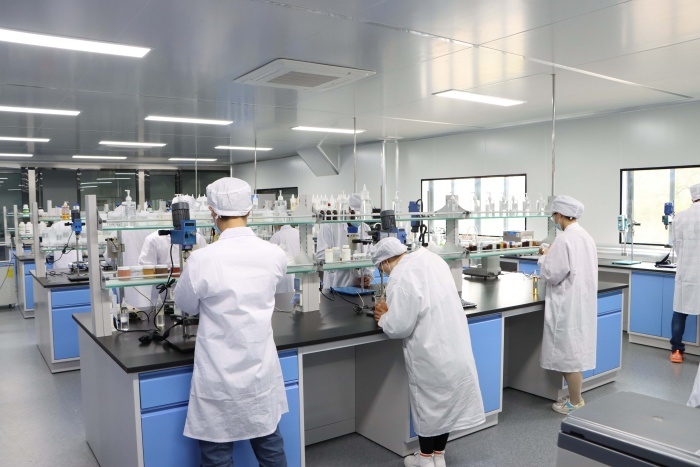
II. Revisiting the “Heart” — R&D Determines the Formula’s Sophistication
High-quality Facial cleanser OEM factory This is by no means a simple mixing-and-filling process; rather, it features an independent R&D laboratory and a proprietary formulation library:
1. Can you quickly develop differentiated solutions—such as oil control, moisturization, mildness, and acne treatment—based on the brand’s positioning?
2. Do you have a solid grasp of popular technologies such as amino acid surfactants, APG, and plant extracts, and can you effectively reduce costs?
3. Could you please provide a complete safety and efficacy test report?
Go into the discussion with a clear set of requirements and let the engineers provide immediate insights—this is far more intuitive than just looking at a PowerPoint.
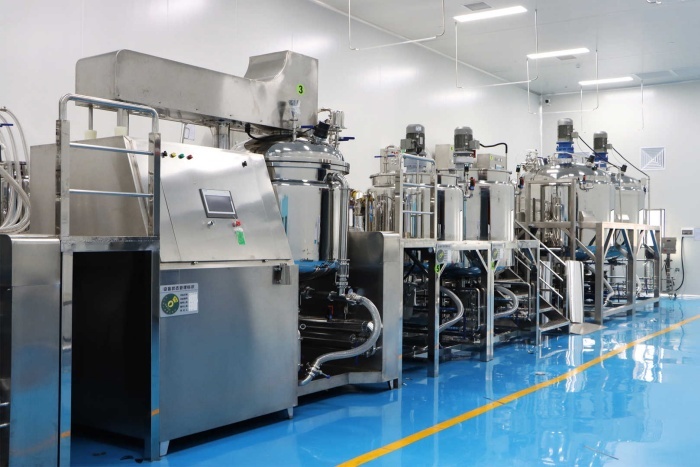
III. Entering the “Delivery Room”—The GMPC Workshop Is a Non-Negotiable Requirement
Whether conducting an on-site visit or a video factory audit, the focus should be on three key areas:
1. Air cleanliness: The filling area shall meet or exceed Class 100,000 standards, with separate pedestrian and material flows.
2. Equipment: Are the emulsification kettle, purified water system, RO membrane, and fully automatic filling line calibrated on a regular basis?
3. Quality Control: Batch-by-batch inspection of raw materials, retention of semi-finished product samples, and triple testing of finished products for microbiological, heavy metal, and physicochemical parameters.
Require the factory to provide third-party test reports for the past three months; if they’re willing to make them public, they’re generally trustworthy.
IV. Review the “Resume”—Success Stories Speak for Themselves
Request authorized, publicly available brand case studies from the factory, with particular attention to projects in a similar price range and distribution channel to yours. If the agency has worked on emerging domestic brands or e-commerce bestsellers, it indicates greater experience with small-batch production and rapid iteration. Next, search the brand name on Xiaohongshu and Douyin to review real user feedback—word-of-mouth is often more trustworthy than marketing brochures.
V. Finalizing “Collaboration”—Flexibility Determines the Starting Pace
1. MOQ: For a startup brand, is it feasible to begin with a trial run of 3,000–5,000 bottles, and will the factory accept such an order?
2. Service Chain: Can you assist with product selection for bottles and containers, design and sample production, copywriting review, and filing for non-special-use cosmetics?
3. Payment Terms: For small-batch orders, is it acceptable to require a prepayment plus a final payment upon shipment?
Put all requirements in the contract, as detailed as possible, to avoid relying on verbal agreements.
The above, do OEM facial cleanser There is no one “best” factory—only the “most suitable” one. By aligning five key dimensions—certifications, R&D capabilities, quality control, project portfolio, and collaboration models—and scoring each on a standardized scale, you can naturally identify top-tier partners. Conduct factory audits with specific questions in mind, let data and real-world case studies do the talking, and empower professional manufacturers to earn your trust through proven performance.
OEM contract manufacturing of facial cleansers,Facial cleanser OEM factory,Cleansing Milk OEM,Cosmetic OEM,Custom manufacturing of amino acid facial cleansers
Related News



Get a free customized solution immediately
Professional cosmetics OEM manager will tailor and provide a full range of contract manufacturing
Contact Information
-
Wealth Hotline:13902401468
-
Processing Hotline:13825199612
-
Business Contact Address: Room 416, Baiyun Shiguang, Baiyun District, Guangzhou
-
New Factory Address: Building 4, No. 19, Lixin 9th Road, Zengcheng District, Guangzhou
Follow Mingyu WeChat Official Account
©2024 Guangzhou Mingyu Cosmetics Manufacturing Co., Ltd. All rights reserved