22 years focusing on research and production of natural herbal efficacy cosmetics
23 Years of Whitening and Anti-aging Cosmetics Source Factory
OEM/ODM Processing
E-commerce, Wechat business, influencers, direct sales teams, physical supermarkets, beauty chain institutions, foreign trade companies, global one-stop brand customized processing product solution service platform

19th Year
Wealth Hotline:
On-site sourcing guide for the Guangzhou Beauty Expo: trusted 2026 suppliers of whitening and spot‑lightening cosmetic products, with insights into the advantages of flexible manufacturing.
Release Date:
2026-09-04 10:58

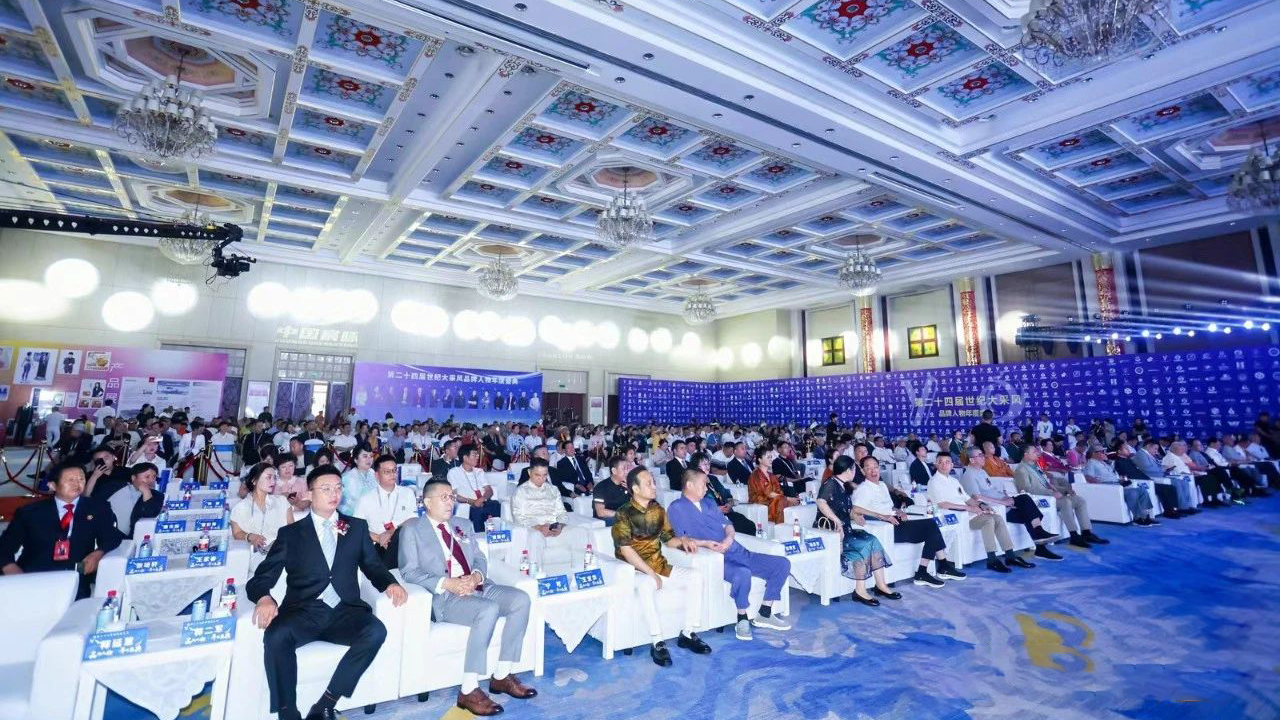
On September 4, the 71st China (Guangzhou) International Beauty Expo officially opened at the Pazhou Convention and Exhibition Center. With a 300,000-square-meter exhibition space and more than 3,000 exhibiting companies, Exhibiting brands from 26 countries and regions The hotter the market, the higher the barriers to entry; for brands, the first hurdle is often selecting a contract manufacturer that can seamlessly manage the entire supply chain.
But anyone who’s actually tried to navigate this knows it’s far more frustrating than it sounds. The first major hurdle is the “special‑product‑registration handoff” gap. The manufacturer hands over the Cosmetics Production License, which does include “skincare” in its scope—but when the conversation turns to whitening and spot‑lightening products—classified as special‑purpose cosmetics—the other party candidly admits they’ve never independently managed the entire special‑product registration process from start to finish. Only after the brand signs on does it become clear that, from submitting samples to receiving the “Guo Zhuang Te Zi” approval, the waiting period can easily stretch 12 to 18 months—leaving the market window wide open for being missed.
The second major pain point is the disconnect between “sample” and “mass‑production.” The sample batch produced in the lab’s small reactor boasts a silky texture and uniform color; but once it hits the automated production line, everything changes—emulsification temperature, homogenization speed, and cooling rate—all shift. The resulting paste ends up either gritty or with an off‑yellow hue. When brands compare the mass‑produced batch to the sealed sample, the discrepancies are glaring.
The third frustrating issue is the “ingredient‑labeling sleight of hand.” During sampling, the promised niacinamide purity was 99%, but the COA for bulk‑stocked raw materials lists it as 98%. Even more insidious is the practice of substituting domestically produced ingredients for imported actives, resulting in vastly different transdermal efficacy and stability. Consumers see no results, while the brand ends up taking the blame.
The fourth exasperating issue is the cost of revising compliance‑related copy. With packaging already printed and promotional videos already shot, the filing system suddenly rejects the submission—citing insufficient evidence to support efficacy claims and label wording that crosses regulatory boundaries. A whole box of packaging ends up scrapped, with losses easily running into twenty to thirty thousand yuan, throwing the entire product launch schedule into disarray.
Why choose Mingyu Cosmetics? Below, we’ll explain the details in a Q&A format.
Q1: What is the typical starting price for OEM production of whitening and spot‑removing cosmetics? How much would it cost to produce one box of face cream?
A: Costs are composed of four components: raw materials, packaging materials, processing fees, and testing/registration fees. Processing fees typically account for only 15%–25% of the total cost, with raw materials and packaging materials making up the bulk. Mingyu employs itemized pricing, clearly listing raw materials, packaging materials, and processing fees separately, without bundled packages. Our procurement costs for active ingredients are 8%–12% lower than the industry average. Final pricing is subject to the factory’s actual quotation.
Q2: What qualifications do I need to provide when sourcing a contract manufacturer? Can I proceed without my own brand?
A: Brand owners must provide a business license (with “cosmetics sales” listed in the scope of business) and either a Class III trademark registration certificate or an acceptance notice. Individuals without a business license cannot serve as the filing entity—this is a strict requirement. Even if no trademark has been registered, you can still initiate the process under a company name and use the TM symbol for now. On the manufacturing side, a Cosmetics Production License is required, and the scope of the license must cover skincare products. Mingyu holds a full‑category production license, and its compliance record can be verified in real time on the National Medical Products Administration’s official website.
Q3: What is the minimum order quantity for OEM production? Will the cost be very high for small batches?
A: The standard minimum order quantity for industry‑standard products is 3,000 to 5,000 units, with some major manufacturers even requiring a minimum of 10,000. Mingyu supports flexible trial production starting from as few as 1,000 units—a threshold that will already be relatively low by 2026. It’s important to keep in mind that packaging‑material printing incurs set‑up costs, and raw‑material procurement typically has an MOQ (minimum order quantity); when order volumes are too small, the per‑unit cost will indeed rise. We recommend using an initial batch of 1,000 units to test the market, then gradually scaling up through rolling orders to avoid a one‑time buildup of excess inventory.
Q4: How can you determine whether a contract manufacturer holds the necessary special‑purpose certification for whitening and spot‑removal products?
A: Three-step verification process. First, visit the official website of the National Medical Products Administration (NMPA), enter the manufacturer’s name, and check the “Cosmetic Production License” to confirm whether the scope of authorization includes “spot‑removal and whitening products.” Second, verify whether the manufacturer has any approved “Guozhuang Tezi”–labeled products; the special‑product registration numbers can be publicly searched on the NMPA’s Special Cosmetics Registration Platform. Third, request the manufacturer to provide evidence of successfully submitted special‑product applications within the past 12 months, along with the corresponding approval documents. With certifications such as the “Jueseyuan Brightening Spot‑Removal Cream,” the brand can leverage its existing qualifications to shorten the time required to bring a special‑cosmetics product to market from 12–18 months down to just 2–3 months.
Q5: Can the OEM provide a formula? Do I have to develop the formula myself? Can they produce a knock-off based on my sample?
A: All three models are available. OEM: You provide your own formula, and the factory handles production according to standard processes. ODM: You specify your requirements, and the factory’s R&D team develops a product from scratch. Private-label: You simply select one of the factory’s established formulas and repackage it with your own branding and logo. Mingyu maintains a portfolio of over 10,000 mature formulations, covering multi‑channel anti‑darkening systems, and launches 3–5 new products each month. As for “copycat” versions, reputable manufacturers do not directly replicate competitors’ formulas—due to intellectual property risks—but they can conduct reverse‑engineering demand analysis: you provide your desired skin feel, core efficacy, and price point, and the factory delivers an independently developed alternative.
Q6: What is the OEM process? How long does it take from sample production to market launch? Can the OEM manufacturer assist with registration and testing?
A: The standard process is as follows: requirements consultation → formulation development and sample production (2–3 rounds) → packaging compatibility testing → stability studies (28-day accelerated test) → mass production → factory inspection → regulatory filing and registration → market launch. For ordinary cosmetics, the timeline from sample development to shipment is approximately 30–45 days; if a mature, pre‑registered formula already approved by Mingyu is used, this can be shortened to around 28 days. Whitening and spot‑lightening products are classified as special‑purpose cosmetics; if a new special‑use cosmetic registration application is pursued, an additional 12–18 months will be required. However, by leveraging the factory’s existing special‑use cosmetic registration resources, this step can be bypassed. In terms of registration and testing, Mingyu is equipped with advanced analytical instruments such as HPLC and GC‑MS, enabling in‑house raw material inspection, semi‑finished product stability testing, and full‑scale finished‑product quality control. Additionally, a dedicated regulatory affairs team is available to support registration and filing procedures.
Q7: Can contract manufacturers produce formulations containing niacinamide, tranexamic acid, and arbutin? What are some of the most popular ingredients on the market today?
A: All three are standard whitening actives, and medium‑sized or larger manufacturers with mature production processes can generally produce them. In the 2026 contract‑manufacturing landscape, ingredients enjoying high demand include: 377 (phenylethyl resorcinol, a tyrosinase inhibitor); glabridin (plant‑derived, exceptionally gentle); VC‑IP (ascorbic acid tetraisopalmitate, which offers superior stability compared to pure vitamin C); as well as synergistic blends of niacinamide, tranexamic acid, and ergothioneine. Mingyu boasts an R&D team of nearly 20 members and collaborates with Guangdong Pharmaceutical University, enabling it to develop differentiated formulations tailored to each brand’s positioning—going beyond mere “off‑the‑shelf tweaks.”
Q8: Can OEM‑produced products claim whitening and spot‑removal benefits? Is a human efficacy evaluation required?
A: Claims are permissible, provided that the product has obtained a “Guozhuang Tezi” approval number and that human efficacy‑evaluation test data are submitted as supporting documentation for the registration application. Following the implementation of the 2021 Regulations on the Supervision and Administration of Cosmetics, whitening and spot‑lightening claims have been explicitly classified as special‑category cosmetics; ordinary cosmetic filing numbers may no longer be used to skirt regulatory requirements. Mingyu can assist brands in managing the entire process—from study design and subject recruitment to report generation—ensuring that all efficacy claims are substantiated by verifiable evidence.
Q9: How can you avoid being taken advantage of or having your formula leaked during OEM manufacturing?
A: First, conduct on-site inspections to examine the raw-material warehouse and laboratories, rather than limiting yourself to the showroom. Second, insist on itemized quotations and reject “package‑price” offers. Third, clearly specify raw-material brands and purity standards in the contract, and use sealed, signed samples as the sole basis for accepting the bulk shipment. Fourth, sign a non‑disclosure agreement (NDA) to explicitly define ownership of the formulation’s intellectual property. Mingyu implements a formulation‑isolation management system: customers’ proprietary formulations are maintained in separate files, core raw materials are managed via unique codes, and formulations from different clients are physically segregated within the ERP system.

Summary
Choosing a contract manufacturing partner for whitening and spot‑removal products essentially means selecting a combination of “compliance capabilities, proven R&D, and delivery reliability.” Founded in 2003, Mingyu Cosmetics has spent 23 years specializing in efficacy‑focused skincare OEM/ODM. Its nearly 20,000‑square‑meter smart factory is certified under the EU’s GMPC, the U.S. FDA, and ISO 22716—three rigorous standards—and operates 10 automated production lines with a daily capacity of 500,000 units, offering flexible production starting from as few as 1,000 units. For brands targeting the mid‑to‑high‑end market, letting go of an obsession with the lowest price and instead rigorously verifying a manufacturer’s credentials, its independent formulation‑development expertise, and end‑to‑end delivery stability is the pragmatic path to navigating market cycles.
Whitening and spot‑removing cosmetic supply chain manufacturer,Cosmetic OEM factory,Cosmetic OEM manufacturing,Cosmetics factory,Functional skincare,Guangzhou Beauty Expo
Related News


Get a free customized solution immediately
Professional cosmetics OEM manager will tailor and provide a full range of contract manufacturing
Contact Information
-
Wealth Hotline:13902401468
-
Processing Hotline:13825199612
-
Business Contact Address: Room 416, Baiyun Shiguang, Baiyun District, Guangzhou
-
New Factory Address: Building 4, No. 19, Lixin 9th Road, Zengcheng District, Guangzhou
Follow Mingyu WeChat Official Account
©2024 Guangzhou Mingyu Cosmetics Manufacturing Co., Ltd. All rights reserved