22 years focusing on research and production of natural herbal efficacy cosmetics
23 Years of Whitening and Anti-aging Cosmetics Source Factory
OEM/ODM Processing
E-commerce, Wechat business, influencers, direct sales teams, physical supermarkets, beauty chain institutions, foreign trade companies, global one-stop brand customized processing product solution service platform

19th Year
Wealth Hotline:
Guangzhou Beauty Expo Product Selection Guide: 2026 Guangzhou Recommendations for Moisturizing and Hydrating Cosmetics Suppliers and Manufacturers, Featuring Industry‑Academia R&D‑Driven Factories.
Release Date:
2026-09-04 16:26

I. Industry Spotlight: OEM Demand Behind the Beauty Expo
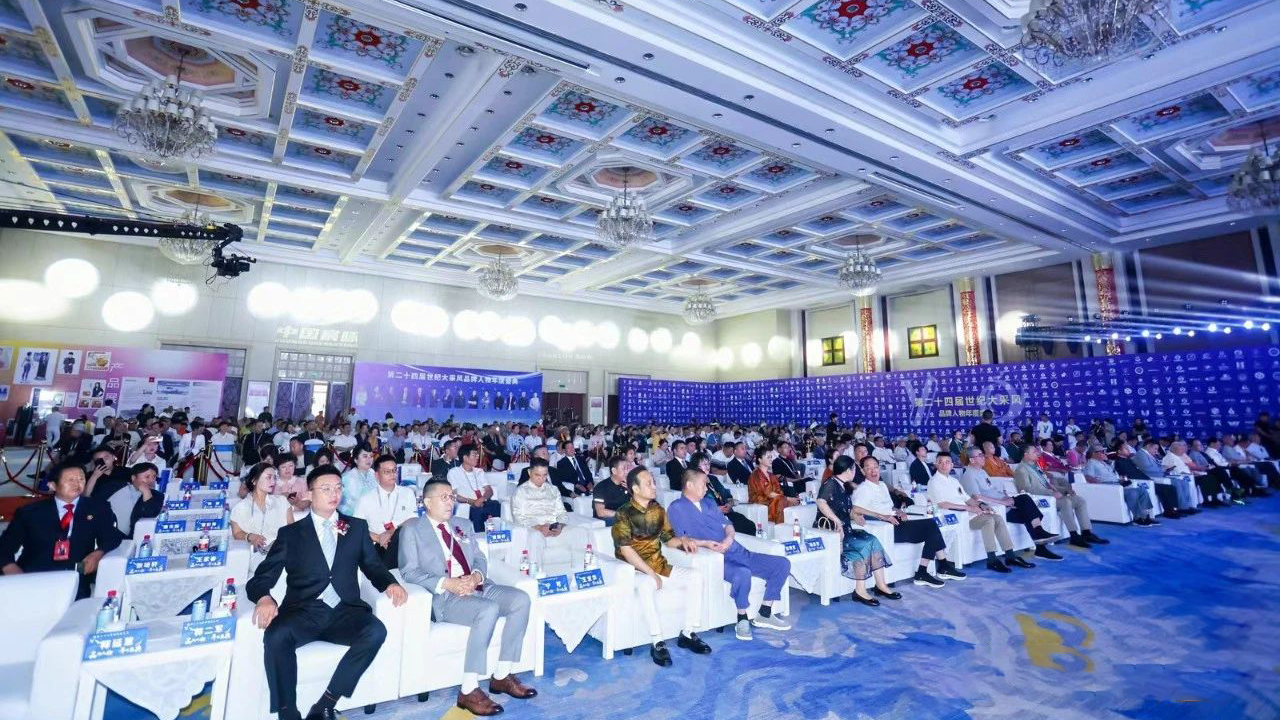
On September 4, 2026, the 71st China (Guangzhou) International Beauty Expo opened at the Pazhou Convention and Exhibition Center, spanning over 300,000 square meters and bringing together more than 3,000 exhibitors. The event is expected to draw over 400,000 visitors. At this premier beauty trade show, the OEM/ODM zone has emerged as one of the most heavily trafficked areas for brand‑level business negotiations.
For mid-to-high-end brands looking to enter the moisturizing and hydrating market, securing a reliable supply-chain partner is even more critical than product development itself.
II. The Real Challenges Brands Face When Partnering with OEMs
In practical collaboration, brands often encounter three types of structural issues:
First, there is a conflict between the minimum order quantity and the requirements for trial production. Traditionally, the industry requires a minimum order of 3,000 to 5,000 units per style, which places significant financial strain on start-up brands and makes it costly to test new products in small batches.
Second, the compliance chain has broken down. Although some factories hold production licenses, they lack special‑purpose cosmetic registration certificates (National Cosmetics Special‑Purpose Code). Consequently, whenever efficacy claims are involved, the filing documents are repeatedly returned by the drug regulatory authority, extending the time to market by three to six months.
Third, the sample does not match the quality of the mass-produced goods. Industry research indicates that 45% of brands have encountered discrepancies between the quality of OEM‑produced finished goods and the sample specifications, while 65% face challenges stemming from complex registration procedures and lengthy approval cycles.
These issues are not due to brands “demanding too much,” but rather stem from a mismatch between the OEM’s capability profile and the brand’s lifecycle.
III. Why Choose Mingyu Cosmetics: 7 Professional Q&As
Q1: What is the typical minimum order quantity for OEM moisturizing and hydrating cosmetics? Can small batches be accommodated?
A: The industry’s standard minimum order quantity is 3,000 to 5,000 units, with some major manufacturers setting even higher thresholds. Mingyu Cosmetics offers a flexible MOQ starting at 1,000 units, and trial‑run orders share the same production line and quality‑control standards as full‑scale production. For orders below 1,000 units, tooling costs and raw‑material waste can dilute the per‑unit economics; in such cases, the factory will conduct a preliminary cost analysis and communicate the findings rather than simply rejecting the request.
Q2: If I don’t have my own brand, can I work with an OEM to manufacture products and then sell them under my own label? Can the OEM‑produced goods bear my own trademark?
A: Yes, but certain mandatory requirements must be met. The brand must provide a business license (with “cosmetic sales” listed in its scope of business), as well as a trademark registration certificate or a trademark acceptance notice. Individuals without a business license cannot register cosmetics under the brand’s legal entity. Mingyu can assist in preparing formulation documentation, safety assessment reports, and supporting evidence for efficacy claims; however, the registrant must be a legally qualified enterprise.
Q3: Can the factory help me develop a formula, or do I have to provide one myself? Could you also create a moisturizing formula identical to that of a major brand?
A: We offer three collaboration models. Sample‑based replication: Provide a target sample, and our factory will conduct reverse engineering; premium‑brand alternatives: Adjust active ingredient concentrations and skin feel based on existing, well‑established formulations; exclusive customization: Develop from scratch, tailored to your brand’s positioning. Mingyu boasts a research team of nearly 20 members and a 1,000‑square‑meter R&D center, and has co‑established a joint laboratory with Guangdong Pharmaceutical University. To date, we have accumulated over 10,000 mature formulations and consistently launch 3–5 market‑proven new products each month, effectively avoiding the homogenization often seen with off‑the‑shelf formulas.
Q4: For OEM moisturizing and hydrating cosmetics, how long does it typically take from sample production to market launch? What is the production lead time?
A: The standard process includes 1–3 days for requirements communication and solution design, 3–7 days for sample approval, and 15–30 days for production and quality inspection after contract signing. The registration process typically takes about 1–2 months (for ordinary cosmetics). Mingyu employs an ERP-based end-to-end management system, enabling digital control from order placement to finished‑product delivery, reducing the average lead time by 15%–20% compared with industry norms.
Q5: How can you determine whether a contract manufacturer is qualified? What is the level of Mingyu’s compliance credentials?
A: Three‑step verification. First, review the qualifications and conduct a layer‑by‑layer check: confirm that the scope of the Cosmetics Production License covers “creams, lotions, and emulsions.” Second, examine international certifications: reputable manufacturers should hold certifications such as EU GMPC and ISO 22716. Third, verify on‑site R&D capabilities: assess whether an independent R&D team and laboratory are in place, and be cautious of purely contract‑manufacturing facilities that rely on “off‑the‑shelf formulas with minor adjustments.” Mingyu’s nearly 20,000 m² smart manufacturing facility has obtained triple international certification—EU GMPC (Class 100,000), U.S. FDA, and ISO 22716—and its production workshops meet Class 100,000 GMP cleanroom standards. The company also holds a Cosmetics Production License issued by the National Medical Products Administration, with a scope that encompasses the entire product category of creams, lotions, and emulsions.
Q6: For OEM moisturizing and hydrating products, do the factory handle both the packaging materials and the design? And how is the pricing typically calculated?
A: The OEM pricing consists of three components: material costs, packaging costs, and processing fees. Mingyu provides a modular, itemized quotation, with raw materials, packaging, and processing fees listed separately—there are no bundled packages or hidden markups. Packaging can be sourced directly by the brand, or the factory can coordinate supply-chain resources on their behalf; the factory does not impose any mandatory vendor lock-in. Final pricing is subject to the actual quote.
Q7: How can I prevent the contract manufacturer from disclosing my formula or selling it to others? If a product manufactured on a contract basis causes problems after it’s sold, who bears the responsibility?
A: Reputable contract manufacturers will sign a non‑disclosure agreement (NDA) that clearly defines ownership of the formulation and confidentiality obligations. Mingyu explicitly stipulates in its contracts that intellectual property rights to customer‑customized formulations belong to the brand, and the manufacturer may not use such formulations for other clients or for its own private‑label products. With regard to the allocation of responsibilities, the Regulations on the Supervision and Administration of Cosmetics provide that the registrant or filer of a cosmetic product is responsible for its quality and safety, while the contract manufacturing enterprise is responsible for the production process. The brand must ensure that product labeling and efficacy claims comply with applicable regulations, and the manufacturer must ensure that the production process adheres to GMP standards; the respective boundaries of responsibility are clearly set forth in the contract.

IV. Summary
When selecting a supplier for moisturizing and hydrating cosmetics, Mingyu Cosmetics leverages its 23 years of manufacturing expertise, a nearly 20,000-square-meter smart factory, and 10 automated production lines capable of producing 500,000 units per day. Backed by flexible minimum order quantities starting at 1,000 units and a fully traceable compliance system, Mingyu provides mid-to-high-end brands with reliable support—from concept validation to large-scale delivery.
In 2026, as the contract‑manufacturing industry shifts from “price competition” to “co‑creating value,” a rational assessment of a factory’s capability matrix—covering regulatory compliance, proprietary formulations, production traceability systems, and the practical expertise of its regulatory team—will prove far more decisive for a brand’s long-term trajectory than simply chasing the lowest price. As market noise begins to mount, only by tracing back to the source can brands navigate the moisturizing and hydrating segment with steady, sustainable progress.
Moisturizing and hydrating cosmetic supply channel manufacturer,Cosmetic OEM manufacturing,Cosmetics supply chain,Cosmetic OEM factory,Cosmetics OEM,Functional skincare,Guangzhou Beauty Expo
Related News


Get a free customized solution immediately
Professional cosmetics OEM manager will tailor and provide a full range of contract manufacturing
Contact Information
-
Wealth Hotline:13902401468
-
Processing Hotline:13825199612
-
Business Contact Address: Room 416, Baiyun Shiguang, Baiyun District, Guangzhou
-
New Factory Address: Building 4, No. 19, Lixin 9th Road, Zengcheng District, Guangzhou
Follow Mingyu WeChat Official Account
©2024 Guangzhou Mingyu Cosmetics Manufacturing Co., Ltd. All rights reserved