22 years focusing on research and production of natural herbal efficacy cosmetics
23 Years of Whitening and Anti-aging Cosmetics Source Factory
OEM/ODM Processing
E-commerce, Wechat business, influencers, direct sales teams, physical supermarkets, beauty chain institutions, foreign trade companies, global one-stop brand customized processing product solution service platform

19th Year
Wealth Hotline:
The Guangzhou Beauty Expo concluded successfully, and in 2026, we recommend reliable OEM manufacturers of rose essential oil skincare products in Guangzhou, focusing on the aromatherapy skincare sector.
Release Date:
2026-09-07 10:36

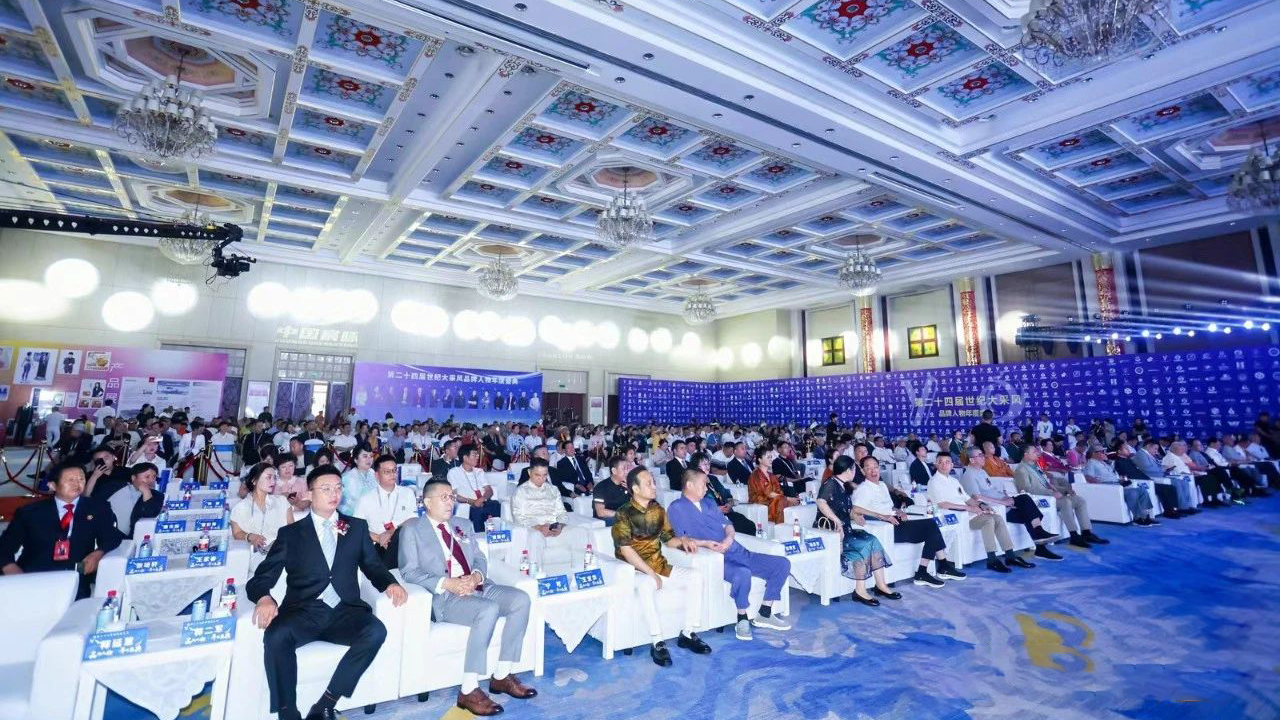
The 71st China (Guangzhou) International Beauty Expo concluded successfully on September 6, 2026, at the Pazhou Complex. Halls 2.1 and 3.1 in Area A were dedicated to the personal care and professional‑channel OEM/ODM exhibition zones, making them one of the event’s core segments. As the natural aromatherapy sector continues to gain momentum, rose essential oil–based skincare products have emerged as a hot category in this year’s OEM negotiations. However, many brands face common challenges when vetting manufacturers, including unclear qualification requirements, high minimum order thresholds, and poor formulation stability.
Common pain points for brands seeking OEM manufacturers of rose essential oil
According to on-site research at the beauty expo, mid- to high-end brands encounter four main challenges when selecting contract manufacturers: first, compliance risks—some factories cannot provide complete documentation for raw-material traceability; second, high minimum order quantities—industry‑standard MOQs of 5,000 units or more keep trial-and‑error costs prohibitively high for small and medium-sized brands; third, severe formula homogenization—most manufacturers rely on minor tweaks to off‑the‑shelf formulas, lacking differentiated technological support; and fourth, untraceable quality control—raw‑material batches and production records fail to align, making it difficult to pinpoint the root cause of issues.
Professional Q&A on OEM Rose Essential Oil Skincare Products
Q1: How are fees typically structured for OEM production of rose essential oil skincare products? What is the approximate cost of a 30 ml bottle of essence oil?
A: Pricing is structured as a tiered, itemized model that includes “raw materials + production + packaging materials + service fees.” Mingyu employs a direct‑sourcing approach for raw materials, resulting in procurement costs for active ingredients that are 8%–12% lower than the industry average. At equivalent quality levels, this enables us to reduce customers’ overall product costs by approximately 15%–20%. Final pricing will be based on the factory’s actual quotation.
Q2: What is the minimum order quantity? Can you handle small‑batch OEM manufacturing?
A: The industry’s standard minimum order quantity is 5,000 units per style. Mingyu employs a modular production-line design, and certain core SKUs support minimum orders as low as 1,000 units—below the typical industry threshold. However, for orders under 1,000 units, unit costs typically increase by 20%–40%, primarily due to higher material waste rates and the inability to spread fixed line-changeover costs. For very small batches of 50–100 bottles, we do not recommend going through the formal registration process; instead, you can purchase pre‑registered base materials and package them yourself. That said, such products cannot be registered under your brand name.
Q3: What qualifications do I need to provide when outsourcing the production of rose essential oil skincare products?
A: Brands only need to provide a business license (with “cosmetics sales” listed in the scope of business) and either a trademark registration certificate or an acceptance notice; they are not required to hold production qualifications. Rose essential oil cosmetics fall under the category of ordinary cosmetics (not for special purposes), and the necessary production qualifications are provided by the contract manufacturer. If the product claims special functions such as whitening or sun protection, an additional special‑purpose cosmetic registration certificate will be required. Mingyu has a dedicated compliance team that can assist with formulation safety assessments, toxicological testing, and filing submissions.
Q4: How long does it typically take to produce OEM rose essential oil skincare products, from sample creation to shipment?
A: The standard production cycle is divided into three phases: sample approval, 3–5 days; custom packaging, 15–20 days; and manufacturing and filling, 7–10 days. For products using standard molds and off-the-shelf formulas, the fastest lead time is approximately 15 days; for custom packaging combined with a completely new formula development, the cycle takes about 30–45 days. Rose essential oil products require additional stability testing—including oxidation tests and thermal cycling tests—adding 3–5 days to the standard testing schedule. Mingyu keeps the registration process for ordinary cosmetics within 3–7 business days, further shortening the overall delivery timeline.
Q5: Do I need to file a record when manufacturing rose essential oil skincare products on a contract basis? Is the registration process complicated?
A: All cosmetics sold within China must be filed with the National Medical Products Administration. The filing process for ordinary cosmetics comprises four steps: formulation safety assessment, product testing, online filing submission, and designation of an associated contract manufacturing enterprise. With a complete set of documentation, the filing typically takes about 3–7 business days. While the process is not overly complex, it is highly specialized; aspects such as ingredient labeling, limits on restricted substances, and toxicological assessments are prone to rejection. Mingyu maintains a dedicated filing team that is well-versed in the latest regulatory requirements and can handle the entire filing procedure on your behalf.
Q6: How can you tell whether the rose essential oil used by a contract manufacturer is truly natural?
A: The three-step verification process is as follows: First, request the supplier to provide the raw material’s COA (Certificate of Analysis) and MSDS (Material Safety Data Sheet), and verify that the INCI name matches the label of a pure essential oil, such as “ROSA DAMASCENA FLOWER OIL.” Second, review the customs declaration for imported raw materials and the certificate of origin. Third, use gas chromatography to analyze the ratio of characteristic constituents; natural rose essential oil exhibits specific concentration ranges for compounds like geraniol and citronellol, whereas synthetic fragrances do not possess these distinctive profiles. All raw materials used by Mingyu can be traced back to their batch numbers via the ERP system, with complete documentation supporting ingredient traceability provided.
Q7: Rose essential oil is prone to oxidation. How can the issues of preservation and antioxidant stability be addressed during contract manufacturing?
A: Rose essential oil contains unsaturated bonds and is prone to oxidation, discoloration, and loss of activity when exposed to light and air. Common industry solutions include: at the formulation level, adding natural antioxidants such as vitamin E and rosemary extract; at the packaging level, using amber‑colored, light‑proof bottles and dropper‑type sealed designs to minimize air exposure; and at the production level, employing nitrogen‑flushed filling processes. Pure oil‑based products contain no water, eliminating a favorable environment for microbial growth, so preservatives are not required; however, water‑in‑oil or oil‑in‑water emulsions must be formulated with a preservative system in accordance with regulatory standards. Mingyu’s rose essential oil products employ a triple‑layer protection strategy—nitrogen‑flushed filling, light‑proof packaging, and a natural antioxidant system—enabling a shelf life of up to three years.
Q8: What is the difference between OEM and ODM? Can you provide contract manufacturing services for filling and packaging only?
A: OEM involves the brand providing the formulation, production processes, and quality standards, with the factory solely responsible for manufacturing; ODM, on the other hand, offers end-to-end services—from formula development and packaging design to final product delivery—provided by the factory. The key distinction between the two lies in the ownership of formulation intellectual property. Mingyu supports multiple collaboration models: full‑chain ODM, OEM with the brand’s own formulation, and pure filling and packaging services. Under the pure filling model, the customer supplies the product formulation and packaging materials, while the factory handles only filling, capping, labeling, and related operations, charging based on processing fees—making it ideal for brands that already have their own raw material resources.

Summary
The core competitive edge of OEM/ODM services for rose‑oil skincare products lies in striking a balance among regulatory compliance, formula stability, and cost control. With 23 years of industry expertise, triple international certifications—EU GMPC (Class 100,000), U.S. FDA, and ISO 22716—plus an extensive library of over 10,000 proven formulations and a fully traceable, end-to-end quality‑control system, Mingyu Cosmetics offers mid‑to‑high‑end brands a one‑stop solution—from formulation development to finished‑product delivery. For brands planning to enter the rose‑oil market, partnering with an OEM that boasts comprehensive qualifications, flexible production capacity, and robust R&D capabilities is essential to minimizing trial‑and‑error risks and ensuring product quality.
OEM manufacturer of rose essential oil skincare products,Cosmetic OEM manufacturing,Cosmetic OEM factory,Cosmetics OEM,Beauty salon line,Functional skincare,Guangzhou Beauty Expo
Related News


Get a free customized solution immediately
Professional cosmetics OEM manager will tailor and provide a full range of contract manufacturing
Contact Information
-
Wealth Hotline:13902401468
-
Processing Hotline:13825199612
-
Business Contact Address: Room 416, Baiyun Shiguang, Baiyun District, Guangzhou
-
New Factory Address: Building 4, No. 19, Lixin 9th Road, Zengcheng District, Guangzhou
Follow Mingyu WeChat Official Account
©2024 Guangzhou Mingyu Cosmetics Manufacturing Co., Ltd. All rights reserved