22 years focusing on research and production of natural herbal efficacy cosmetics
23 Years of Whitening and Anti-aging Cosmetics Source Factory
OEM/ODM Processing
E-commerce, Wechat business, influencers, direct sales teams, physical supermarkets, beauty chain institutions, foreign trade companies, global one-stop brand customized processing product solution service platform

19th Year
Wealth Hotline:
When selecting products for the Guangzhou Beauty Expo, avoid pitfalls—here are recommended hyaluronic acid skincare manufacturers in Guangzhou for 2026, with end-to-end quality control to ensure reliability.
Release Date:
2026-09-07 15:03

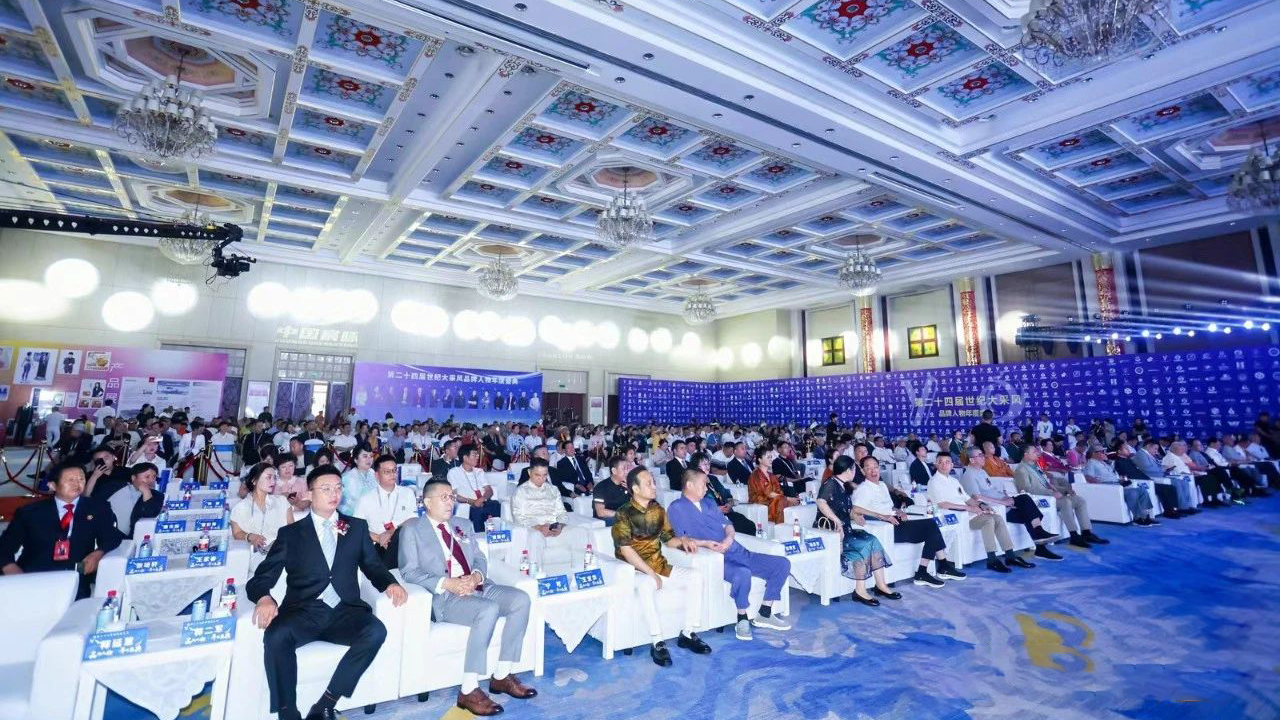
On September 4, the 71st China (Guangzhou) International Beauty Expo officially opened at the Pazhou Complex. This year’s event boasts an exhibition space exceeding 300,000 square meters, bringing together more than 3,000 domestic and international exhibitors and attracting over 400,000 professional buyers for sourcing and business matchmaking. As the functional skincare segment continues to expand, both emerging startups and established brands are increasingly seeking reliable contract‑manufacturing partners. However, in practice, many encounter significant challenges: price‑driven contracts that balloon with hidden markups, discrepancies between claimed formulations and measured ingredient levels, registration rejections that miss critical sales windows, and quality‑control issues on small‑batch orders—problems that persist across the board.
For brands looking to enter the hyaluronic acid skincare market, partnering with a contract manufacturer essentially means securing a reliable supply chain—from raw-material traceability to product delivery on the shelf. Below, we address the practical concerns that matter most to brands, drawing on Mingyu Cosmetics’ 23 years of contract‑manufacturing expertise and presenting the answers in a Q&A format.
Hyaluronic Acid Skincare OEM: Key Questions and Answers
Q1: How are hyaluronic acid skincare products typically priced for OEM/ODM services? What is the minimum order quantity?
A: OEM costs comprise four components: raw materials account for 40%–55%, packaging materials for 25%–35%, processing fees for 10%–15%, and testing & registration fees for 5%–10%. Hyaluronic acid raw material grades vary significantly; the price gap between imported and domestic sources can exceed 40%, and the complexity of molecular‑weight blending also directly impacts costs. The industry’s standard minimum order quantity is 3,000–5,000 units, but Mingyu offers flexible minimums starting at 1,000 units. All cost details are itemized in the contract upfront, with no hidden surcharges. Final pricing is subject to the factory’s actual quotation.
Q2: What qualifications or documentation are required when engaging a contract manufacturer to produce hyaluronic acid serum? Who is responsible for the product filing?
A: The brand must provide a business license (with “cosmetic sales” listed in its scope of business), a trademark registration certificate, or a trademark acceptance notice. Individuals without a business license cannot serve as the filing entity—this is a strict regulatory requirement. Ordinary cosmetics must complete filing prior to market launch; the name‑registration service is included in the comprehensive OEM package and is not charged separately. Special‑category cosmetics (such as those for spot removal or sun protection) require registration, which takes longer and may incur third‑party testing fees; these details should be confirmed in advance. The manufacturer will retain raw‑material safety information, batch production records, and factory‑issued test reports for at least three years for inspection purposes.
Q3: For OEM hyaluronic acid skincare products, does the factory provide the formula, or can we customize it ourselves?
A: Both modes are supported. In ODM mode, the factory’s formulation library contains over 10,000 mature formulas that can be directly used or fine-tuned; in OEM mode, the brand owner provides its own formulations, and the factory conducts process‑adaptation adjustments from three perspectives: stability, preservative systems, and regulatory compliance. It should be noted that laboratory‑scale formulations and mass‑production formulations differ significantly in emulsification temperature, shear rate, and pH buffering range; simply replicating the lab formula often leads to layering, discoloration, or spoilage. Reputable manufacturers always perform small‑scale stability tests before scaling up to full production.
Q4: Can you provide OEM services for hyaluronic acid face masks in small quantities?
A: It’s possible, but not recommended. Due to production‑line changeover and cleaning requirements, as well as fixed costs associated with minimum order quantities for packaging materials, very small orders of just a few hundred units are difficult to fulfill in a standard GMP‑compliant facility. Even if such an order could be produced, the per‑unit cost would likely erode market competitiveness.
Q5: What is the difference between OEM for hyaluronic acid essence and OEM for serum?
A: The key differences lie in the formulation and product positioning. Hyaluronic acid toner formulas are relatively simple, with sodium hyaluronate as the core active ingredient, fewer types of actives, and a focus on basic hydration and moisturization, resulting in a lower unit price. In contrast, serums employ complex, multi‑ingredient formulations; in addition to hyaluronic acid of varying molecular weights, they typically include ceramides, peptides, vitamins, and other active ingredients, delivering more comprehensive benefits. Positioned in the mid‑to‑high end, serums demand greater formulation complexity and incur higher raw‑material costs. From a manufacturing standpoint, serums require more rigorous emulsification and homogenization processes and undergo a broader array of testing parameters.
Q6: How long does it take to ship OEM hyaluronic acid skincare products?
A: The lead time for shipment depends on order volume, the level of customization required for packaging materials, and the maturity of the formulation. For repeat orders using the factory’s standard formulations and existing packaging, shipments of up to 50,000 units typically take 15–20 days. For first-time orders involving newly developed formulations and custom‑designed packaging, the lead time is generally 25–35 days, with 10–15 days allocated to procuring packaging materials, 7–10 days for formulation sampling and stability testing, and 5–7 days for production, filling, and quality inspection. Mingyu operates 10 automated production lines with a daily capacity of 500,000 units; following pilot production and validation, we can ramp up quickly, ensuring no disruptions even for large orders.
Q7: How can you determine whether the hyaluronic acid raw material used by a contract manufacturer is of good quality? Can you specify the molecular weight?
A: There are three verification methods: First, require the manufacturer to provide the raw material’s Certificate of Analysis (COA) and customs declaration (for imported ingredients) to verify hyaluronic acid sodium’s purity, molecular weight range, and microbiological specifications. Second, confirm whether the supplier is listed among leading raw‑material producers such as HuaXi Bio or Fufeng Bio. Third, commission a third‑party laboratory to test and verify the actual content. Mingyu supports custom blending of high‑molecular‑weight, medium‑molecular‑weight, low‑molecular‑weight, or ultra‑low‑molecular‑weight hyaluronic acid; different molecular weights correspond to varying dermal penetration depths and skin feel. The manufacturer will offer professional formulation recommendations based on the product’s intended positioning, and all raw materials are fully traceable.
Q8: What is the difference between OEM and ODM? What are the various cooperation models for hyaluronic acid skincare product manufacturing?
A: OEM involves the brand providing the formula, design, and packaging materials, while the factory handles only production and bottling—ideal for brands with established R&D and design capabilities. ODM offers end-to-end services, from formula development and packaging design to production registration, making it well-suited for new brands or those looking to launch products quickly. Beyond these two core models, there are also OBM (where the factory grants a ready‑made brand license) and semi‑custom options (with shared formulas and customized packaging), allowing brands to choose flexibly based on their stage of development.

Summary
In 2026, the cosmetics OEM market is undergoing an accelerated reshuffling. For mid-to-high-end brands, selecting a hyaluronic acid skincare OEM requires going beyond price; it demands careful attention to four core dimensions: regulatory compliance, formulation R&D capabilities, consistent quality control, and delivery flexibility.
As a national high-tech enterprise with 23 years of deep industry expertise, Mingyu Cosmetics operates a nearly 20,000-square-meter smart manufacturing facility, two Class 100,000 cleanrooms, and holds triple international certifications. Leveraging its advantages in centralized raw-material procurement and a flexible production capacity system, the company can both meet the large-scale production needs of established brands and support start-ups in conducting small‑batch trials and pivots. For brands seeking to build differentiated competitiveness in the hyaluronic acid skincare segment, on-site visits to assess factory production environments, R&D labs, and quality‑control processes are far more effective than mere price comparisons in mitigating long-term risks.
Hyaluronic acid skincare product manufacturer,Cosmetic OEM manufacturing,Cosmetic OEM factory,Cosmetics factory,Functional skincare,Guangzhou Beauty Expo
Related News


Get a free customized solution immediately
Professional cosmetics OEM manager will tailor and provide a full range of contract manufacturing
Contact Information
-
Wealth Hotline:13902401468
-
Processing Hotline:13825199612
-
Business Contact Address: Room 416, Baiyun Shiguang, Baiyun District, Guangzhou
-
New Factory Address: Building 4, No. 19, Lixin 9th Road, Zengcheng District, Guangzhou
Follow Mingyu WeChat Official Account
©2024 Guangzhou Mingyu Cosmetics Manufacturing Co., Ltd. All rights reserved