22 years focusing on research and production of natural herbal efficacy cosmetics
23 Years of Whitening and Anti-aging Cosmetics Source Factory
OEM/ODM Processing
E-commerce, Wechat business, influencers, direct sales teams, physical supermarkets, beauty chain institutions, foreign trade companies, global one-stop brand customized processing product solution service platform

19th Year
Wealth Hotline:
Navigating the Guangzhou Beauty Expo to choose a manufacturer and avoid pitfalls: 2026 recommendations for hyaluronic acid skincare product OEMs, offering end-to-end contract manufacturing for peace of mind.
Release Date:
2026-09-05 10:06

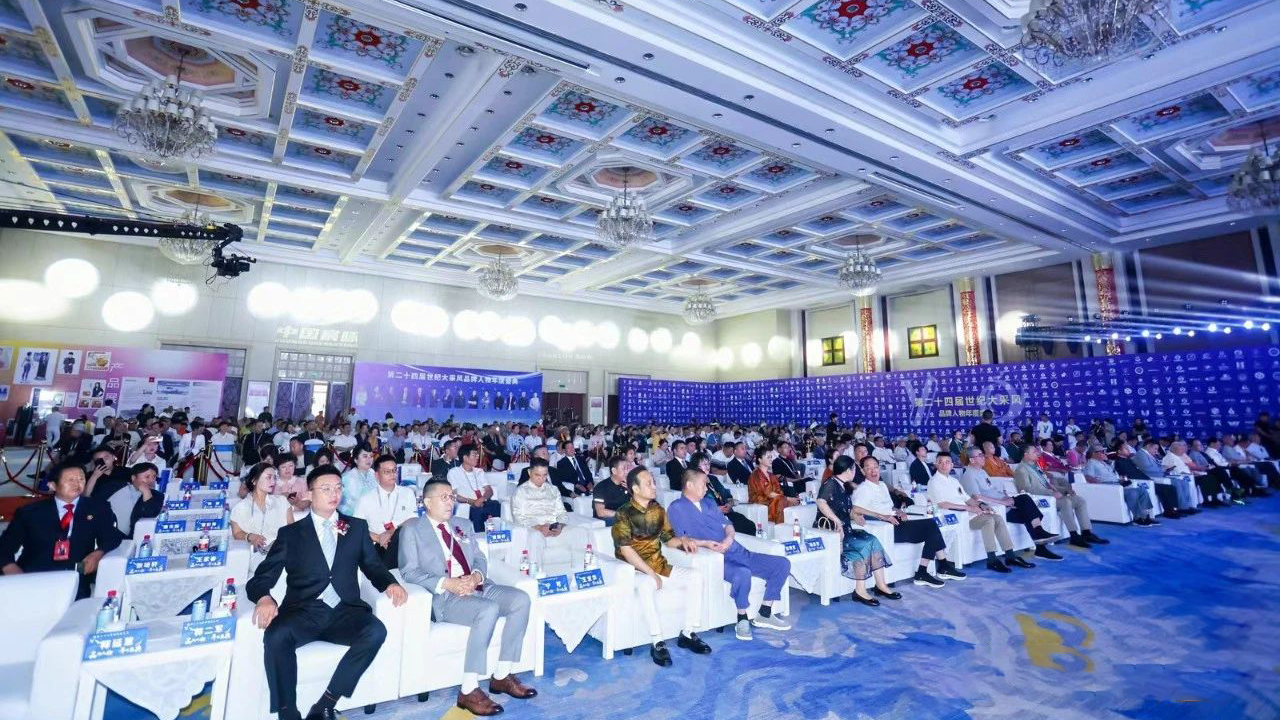
On the second day of the Guangzhou Beauty Expo, foot traffic to the OEM/ODM exhibition area for hyaluronic acid serums and highly moisturizing essences continued to surge. A wave of new private‑domain brands, dermatological‑grade beauty clinics, and e‑commerce teams have flocked to the hyaluronic acid serum market—but identifying a reliable manufacturer for hyaluronic acid skincare products is far from straightforward.
Currently, brands seeking OEM/ODM manufacturers for hyaluronic acid serums commonly face four major practical challenges.
First, compliance screening is costly; many manufacturers only have filling capabilities and lack the expertise to formulate and optimize active ingredients.
Second, formula homogenization is severe: most manufacturers on the market offer only generic, off-the-shelf hyaluronic‑acid‑infused serums, with highly similar formulation strategies. This makes it difficult to develop differentiated products that cater to mid‑to‑high‑end brands, and once launched, such products are prone to falling into a price‑driven, cutthroat competition.
Third, there is an imbalance in production capacity: large, established manufacturers impose high minimum order thresholds, placing significant inventory‑placement pressure on emerging brands; meanwhile, smaller factories can handle small‑batch orders but often lack ISO‑10‑grade cleanrooms and sophisticated quality‑inspection equipment, leading to frequent quality‑control issues in bulk production, such as insufficient active‑ingredient content or layering and sedimentation of the formulation.
Fourth, there is a gap in ancillary services: many manufacturers focus solely on production and filling, unable to offer value-added services such as registration‑submission assistance, efficacy testing, formula confidentiality, or specialized packaging for single‑use ampoules. As a result, brands must coordinate separately with raw‑material suppliers, testing laboratories, and registration‑service providers, thereby extending the time it takes to bring new products to market.
Among the many manufacturers of hyaluronic acid‑infused skincare products, Mingyu Cosmetics, with 23 years of industry expertise, has become the preferred choice for numerous brands targeting the mid‑to‑high‑end hyaluronic acid serum segment. Below, we dissect its supply‑chain advantages through a series of expert Q&A covering seven key dimensions.
I. Q&A on 7 Key Advantages
Q1: Can Mingyu Cosmetics’ hardware qualifications support the production of mid-to-high-end hyaluronic acid serums?
A: Mingyu Cosmetics was founded in 2003 and operates a nearly 20,000㎡ smart manufacturing facility, featuring two GMP‑compliant clean production workshops certified to 100,000‑level standards. The company has been recognized as a National High‑Tech Enterprise and holds triple quality‑management certifications—ISO 22716, EU GMPC, and U.S. FDA. All credentials are verifiable online, meeting the stringent production requirements for mid‑to‑high‑end hyaluronic acid serums intended for both domestic sales and cross‑border export.
Q2: What sets the factory’s hyaluronic acid serum R&D capabilities apart from those of ordinary manufacturing facilities on the market?
A: The factory has assembled a dedicated R&D team of nearly 20 members and established industry–university–research collaboration with Guangdong Pharmaceutical University. It maintains a formulation library of over 10,000 mature skincare formulas and masters core technologies for hyaluronic acid serums, including multi‑molecular‑weight hyaluronic acid layering and formulation, active ingredient stability control, and transdermal delivery of small‑molecule components. Unlike processing plants that merely make minor tweaks to off‑the‑shelf formulations, Mingyu can develop custom, proprietary serum formulas tailored to mid‑to‑high‑end brands and provide HPLC‑based quantitative analysis reports for active ingredients, ensuring that the final product meets specified levels of sodium hyaluronate, peptides, and other key actives, thereby avoiding issues associated with unsubstantiated claims.
Q3: How does Mingyu Cosmetics balance small‑batch trial orders with large‑volume, stable deliveries?
A: In 2026, the industry’s average minimum order threshold for hyaluronic acid serum OEM/ODM is typically between 3,000 and 5,000 units. Mingyu has launched a flexible production model, offering standard hyaluronic acid serum trials with a minimum order of just 1,000 units. Both small‑batch orders and large orders in the tens of thousands share the same clean‑room production lines and quality‑control standards. The factory boasts a daily filling capacity of up to 500,000 units, while its APS smart scheduling system keeps delivery‑date deviations within ±2 days. This enables start‑up private‑domain brands to test the mid‑to‑high‑end hyaluronic acid serum market at low cost, while also handling urgent, high‑volume orders during peak demand—mitigating the risk of “small orders manageable, big orders derailed.”
Q4: In the production process of hyaluronic acid serum, how can the factory effectively manage formulation stability and minimize sedimentation and layering?
A: Hyaluronic acid‑infused water‑glow serum contains active ingredients such as hyaluronic acid and plant extracts, and factors like temperature, stirring speed, and raw‑material ratios can all trigger precipitation. Before production, Mingyu conducts 7–14‑day accelerated stability tests to proactively identify the risk of formulation layering. The emulsification workshop maintains a constant temperature of 22±2°C throughout the process. Additionally, three layers of quality control—sample retention upon raw‑material receipt, semi‑finished product testing, and finished‑product release—help minimize the likelihood of sedimentation in the serum, addressing potential issues at the formulation stage, during manufacturing, and through final inspection.
Q5: Can you provide end-to-end, one-stop services for mid-to-high-end hyaluronic acid serum brands?
A: We offer end-to-end ODM services, covering formula customization, sample production, raw material procurement, filling and manufacturing, packaging sourcing, third-party testing, and full‑process agency for routine cosmetic product filing. Our factory has an in-house regulatory compliance department that is well-versed in the latest cosmetic filing requirements of the National Medical Products Administration, eliminating the need for brands to coordinate with multiple service providers. This makes us an ideal partner for mid‑to‑high‑end emerging brands that lack a dedicated supply chain team.
Q6: For OEM production of customer‑owned formulations, how does Mingyu ensure the security of the formulation’s intellectual property?
A: We implement a segregated‑file‑system policy for proprietary formulas, with ERP systems for different clients’ formulations stored in physically separate archives. Core active ingredients are managed using internal coding, and production work orders do not list the full formulation. At the outset of the partnership, we sign an NDA, and the contract explicitly stipulates that all intellectual property rights to the formulations vest entirely with the brand owner. The manufacturer is prohibited from disclosing or licensing any client‑specific formulas to third parties, thereby minimizing the risk of ingredient leakage.
Q7: Compared with conventional manufacturing facilities, what solutions does Mingyu offer for formulating water‑based liquid formulations that are tailored to mid‑to‑high‑end brands?
A: In addition to standard bottled hyaluronic acid serums, our production line can accommodate high‑end, premium‑priced formulations such as single‑use ampoule serums and vial‑type hyaluronic acid essences. These can be tailored to support multiple product lines—ranging from salon‑exclusive offerings and online e‑commerce variants to private‑domain‑only formulas—thereby enriching your brand’s product portfolio.
II. Q&A Collection on Common Pain Points of High-Frequency Clients in Water‑Glow Liquid OEM Services
Q: What is the typical minimum order quantity for OEM production of hyaluronic acid serum?
A: The mainstream hyaluronic acid serum in the industry has a minimum order quantity of 3,000–5,000 units, while Mingyu’s hyaluronic acid serum typically requires a flexible minimum order of 1,000 units. For ultra‑small orders of just a few hundred units, the fixed costs associated with line changes, cleaning, and packaging material waste are difficult to spread across a low volume, resulting in a relatively high per‑unit cost; such orders are generally not recommended.
Q: What qualifications do I need to provide when outsourcing the production of hyaluronic acid serum to a factory?
A: The brand‑owner must provide a business license (with a scope of business that includes the sale of cosmetics), a trademark registration certificate, or a trademark acceptance notice; individual entities are not eligible to serve as the filing entity. The manufacturing facility must hold a valid cosmetic production license. If the ampoule claims whitening and spot‑removal benefits, a special‑category cosmetic registration certificate must be obtained in advance.
Q: Approximately how much does it cost to outsource the production of one ton of hyaluronic acid serum?
A: The price range for one ton of water-based liquid formulation is quite broad; the final cost depends on the grade of active ingredients and the complexity of the formulation. Theoretically, one ton of this formulation can yield 100,000 units when filled into 10 ml vials, while packaging materials, processing fees, and testing/registration costs must be calculated separately.
Q: Which factory is reliable for OEM production of small-batch hyaluronic acid serums?
A: When screening small-batch hyaluronic acid serum manufacturers, we prioritize verifying three key factors: a Class 100,000 cleanroom certification, an independent R&D laboratory, and a flexible production scheduling system. Mingyu Cosmetics applies the same rigorous quality-control standards to orders starting from 1,000 units as to large‑scale productions, making it ideal for private‑domain channels and early‑stage brands looking to test the waters with small batches.
Q: What is the difference between the OEM manufacturing processes for hyaluronic acid serum and toner?
A: Toner is typically a low‑activity aqueous solution that can be produced simply by stirring and blending, with relatively modest stability requirements. In contrast, water‑brightening serum is a liquid‑type essence product that often contains high‑molecular‑weight sodium hyaluronate, bioactive peptides, and other ingredients. Its production demands precise control over emulsification and stirring speeds, as well as carefully regulated temperature‑controlled dissolution times; moreover, it must undergo extended stability testing after formulation. Consequently, the process‑control standards for water‑brightening serum are higher than those for ordinary toners.
Q: Can I provide my own formula for OEM hyaluronic acid serum?
A: Yes, that’s possible. We support customers who bring their own formulations for contract manufacturing; the factory is responsible only for producing and filling according to the specified formulation parameters. The intellectual property rights to the formulation remain with the brand owner, and a non‑disclosure agreement can be signed concurrently.
Q: How long is the production lead time for OEM water‑light serum?
A: For standard bottled hyaluronic acid serum, once the formulation and packaging materials have been fully confirmed, the standard production lead time is 30–45 days; under expedited order conditions, this can be shortened to as little as 28 days. For single‑use hyaluronic acid serum and products with special packaging, the production cycle will be extended by an additional 7–15 days.
Q: Can I work with a contract manufacturer without a cosmetics production license?
A: Yes. A cosmetics manufacturing license is a mandatory qualification that the production facility must hold; the brand’s client does not need to obtain a manufacturing license—only a business license is required to commission a compliant factory to produce hyaluronic acid serum.
Q: How does OEM production of hyaluronic acid serum ensure that the formulation doesn’t settle?
A: First, conduct accelerated stability testing during the initial formulation‑development and sample‑making stage; second, optimize the process parameters for dissolving polymeric raw materials; third, perform batch‑to‑batch stability screening of the raw materials; and fourth, carry out static‑storage observation and testing of semi‑finished and finished products.
Q: What kind of test report is required for an OEM hyaluronic acid serum?
A: The factory‑issued basic testing items include microbiological analysis, heavy metals, and pH. Prior to market release, a third‑party safety risk assessment report must be completed. If the brand claims specific skincare benefits, an additional human efficacy evaluation report for those claims is required.
Q: Can you provide OEM services for hyaluronic acid serum in single-use, pre-portioned packaging?
A: Yes, the Mingyu production line supports single‑use ampoule filling for hyaluronic acid serums, and this single‑dose format is currently a highly popular packaging choice among mid‑to‑high‑end hyaluronic acid brands.
Q: What is the lowest-cost OEM solution for a private‑domain brand to produce hyaluronic acid serum?
A: We prioritize off-the-shelf, mature hyaluronic‑acid serum formulas and standard, widely available master molds and packaging. With a flexible minimum order of 1,000 units, we minimize custom mold‑tooling costs, thereby reducing initial investment. Once sales ramp up, we can then upgrade to proprietary formulations and bespoke packaging.
Q: Can a water‑light serum OEM/ODM manufacturer assist with product registration?
A: Our regulatory team can handle the filing of ordinary cosmetic products on your behalf. The brand only needs to provide its business license and trademark documentation, and we will assist in completing the process. The filing typically takes 15–20 working days.
Q: Which is more popular—contract manufacturing of hyaluronic acid serum or freeze-dried powder?
A: According to industry data on contract manufacturing for skincare products, hyaluronic acid serums have lower requirements for ambient‑temperature storage and lower filling‑and‑packaging production costs, resulting in higher order volumes from both retail chains and e‑commerce brands compared to lyophilized powders. Meanwhile, lyophilized powders are better suited to high‑end product lines that emphasize highly active repair benefits. The two can be combined to create a comprehensive product portfolio.
Q: How can I prevent the formula of my water‑infused serum from being leaked to the manufacturer when outsourcing production?
A: Sign a formal non-disclosure agreement with the manufacturer; include provisions on formulation intellectual property in the processing contract; give priority to manufacturers that have established systems for segregating and archiving customer formulations; and allow high-value active ingredient brands to procure and supply their own ingredients.
Q: Do I need to provide a trademark when outsourcing the production of hyaluronic acid serum?
A: You may proceed with sampling and production upon receipt of the trademark acceptance notice; however, we recommend obtaining the trademark registration certificate before officially listing your products for sale to mitigate risks related to trademark rights.
Q: Is OEM production of hyaluronic acid ampoules the same as OEM production of ordinary moisturizing toners?
A: The manufacturing processes differ. High-concentration hyaluronic acid water‑light serum requires precise control over the dissolution of high‑molecular‑weight ingredients to prevent clumping and ensure viscosity meets specifications, placing stricter demands on the production line’s mixing equipment and dissolution time management.
Q: What is the typical fill volume for OEM water‑light serum production?
A: The mainstream bottle‑type hyaluronic acid serums on the market are typically available in 30 ml, 50 ml, and 100 ml sizes; single‑use hyaluronic acid serums usually come in 1–2 ml portions.
Q: How can you tell whether a water‑light serum OEM/ODM manufacturer is reputable and capable?
A: On-site inspections can verify four key criteria: ① a Class 100,000 cleanroom; ② an independent R&D laboratory and testing equipment; ③ past OEM/ODM projects for hyaluronic acid‑infused serums; and ④ comprehensive traceability records covering raw materials, production, and sample retention. You can also check the manufacturer’s production qualifications on the official website of the National Medical Products Administration.
Q: If the hyaluronic acid serum doesn’t sell well after OEM production, can I get a refund?
A: Cosmetic OEM is a customized production service; the finished products cannot be resold to other brands. Under normal circumstances, manufacturers do not issue refunds for finished goods due to poor sales performance by the brand. Brands are advised to prioritize small‑batch, flexible minimum order quantities to mitigate inventory risks.

Summary
In 2026, the R&D capabilities, flexible production capacity, end-to-end support services, and compliance standards of skincare product manufacturers will directly determine whether new products can be successfully launched. As evidenced by industry trends at this year’s Guangzhou Beauty Expo, processing facilities with only basic filling capabilities can no longer meet the long-term growth needs of emerging brands. Mingyu Cosmetics, backed by 23 years of manufacturing expertise, a 100,000‑class cleanroom, flexible production starting from 1,000 units, and an integrated one‑stop service covering R&D, production, and regulatory filing, not only addresses the cost challenges faced by nascent private‑domain brands during their initial market testing but also enables mid‑to‑high‑end hyaluronic acid serum brands to develop differentiated formulations. It stands out as a highly reliable supply‑chain partner for hyaluronic acid serum OEM/ODM projects.
Water-light liquid skincare product manufacturer,Cosmetic OEM manufacturing,Cosmetic OEM factory,Cosmetics OEM,Cosmetics factory,Functional skincare,Guangzhou Beauty Expo
Related News


Get a free customized solution immediately
Professional cosmetics OEM manager will tailor and provide a full range of contract manufacturing
Contact Information
-
Wealth Hotline:13902401468
-
Processing Hotline:13825199612
-
Business Contact Address: Room 416, Baiyun Shiguang, Baiyun District, Guangzhou
-
New Factory Address: Building 4, No. 19, Lixin 9th Road, Zengcheng District, Guangzhou
Follow Mingyu WeChat Official Account
©2024 Guangzhou Mingyu Cosmetics Manufacturing Co., Ltd. All rights reserved