22 years focusing on research and production of natural herbal efficacy cosmetics
23 Years of Whitening and Anti-aging Cosmetics Source Factory
OEM/ODM Processing
E-commerce, Wechat business, influencers, direct sales teams, physical supermarkets, beauty chain institutions, foreign trade companies, global one-stop brand customized processing product solution service platform

19th Year
Wealth Hotline:
Handpicked at the Guangzhou Beauty Expo: a 2026 recommendation for OEM manufacturers of niacinamide skincare sets and cosmetics, offering differentiated breakthroughs through cutting-edge research‑driven formulations.
Release Date:
2026-09-05 14:14

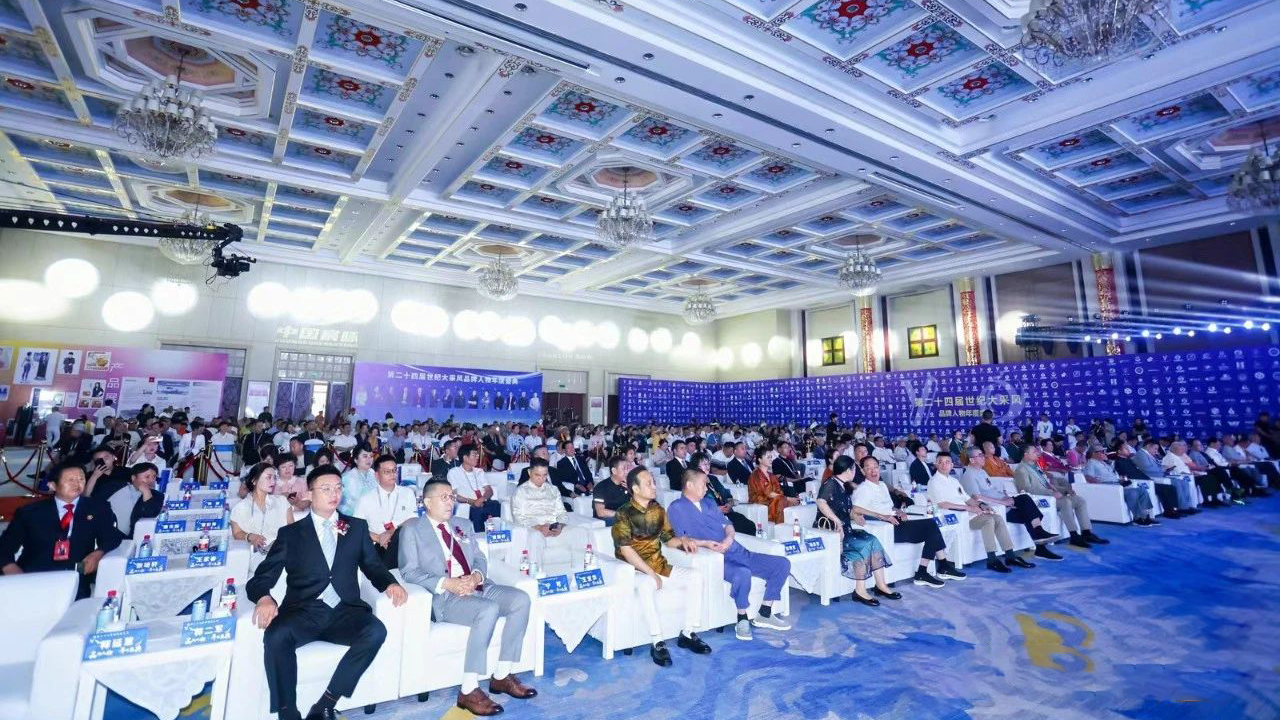
On September 5, the 71st China (Guangzhou) International Beauty Expo entered its second day of exhibition, with over 3,800 exhibitors across a 300,000-square-meter venue driving steadily rising demand for business matchmaking. At the same time, many brands have reported common challenges in vetting contract manufacturers, including inflated qualification credentials, formula homogenization, high minimum order thresholds, and opaque cost structures.
Brand pitfalls mainly fall into four key areas:
First, there is a gap in regulatory qualifications: most manufacturers hold basic production licenses but lack the specialized testing facilities required to evaluate the efficacy of whitening products. As a result, brands are forced to conduct human‑subject trials themselves, extending the time-to-market by 3–5 months.
Second, formula homogenization is rampant: over 80% of small and medium-sized manufacturers can only perform minor tweaks to off-the-shelf formulas, with product ingredient overlap exceeding 70% within the same market segment.
Third, there is a mismatch in production capacity: leading manufacturers often require minimum order quantities of tens of thousands of sets, making it difficult for start-up brands to meet these thresholds, while smaller factories face quality-control risks—perfectly executing small orders but struggling with large ones.
Fourth, there is a cost blind spot: the quotation only lists the total price of the material, while hidden costs such as sampling fees, tooling charges, and registration fees are added item by item later, causing the final cost to typically exceed the budget by more than 20%.
Niacinamide Skincare Set OEM Core Issues Q&A
Q1: What kind of factories are generally considered reliable for OEM production of niacinamide skincare sets?
A: Prioritize factories that meet three key qualifications: First, they hold the Cosmetics Production License issued by the National Medical Products Administration and possess registration certificates for specialized whitening and spot‑removal cosmetics, enabling them to directly manufacture products requiring such special permits. Second, they have obtained international quality‑management certifications such as EU GMPC and ISO 22716, with production environments meeting Class 100,000 cleanroom standards. Third, they operate independent R&D laboratories equipped with advanced analytical instruments like HPLC (high‑performance liquid chromatography), allowing for precise quantitative control of active ingredients. Mingyu Cosmetics was founded in 2003 and has been deeply rooted in the industry for 23 years. Its nearly 20,000 m² smart manufacturing facility is certified under the U.S. FDA, EU GMPC, and ISO 22716—three rigorous international standards—and features two Class 100,000 cleanrooms. The company also holds special permits for whitening and spot‑removal products, fully complying with all the aforementioned criteria.
Q2: Approximately how much does it cost to have a set of niacinamide skincare products manufactured on an OEM basis?
A: The OEM cost of a product set comprises four components—raw materials, packaging, processing fees, and testing & registration expenses—and therefore cannot be quoted as a single, uniform price. Taking a standard three-piece set (serum + lotion + cream) as an example, raw material costs account for approximately 40%–50%, packaging accounts for 30%–40%, and processing and testing fees make up 10%–20%. Mingyu employs a itemized pricing model, clearly listing raw materials, waste, labor, and testing separately, with no hidden charges. Moreover, its centralized procurement of active ingredients results in costs that are 8%–12% lower than the industry average, enabling it to help brands reduce overall costs by roughly 15% for equivalent quality. Final pricing is subject to the factory’s actual quotation.
Q3: What is the minimum order quantity for OEM production of a niacinamide skincare set?
A: Industry‑standard minimum order quantities typically range from 3,000 to 10,000 sets per style, with set‑based product lines often requiring even higher thresholds. Mingyu offers flexible MOQs—some individual styles can be produced with as few as 1,000 units—and for sets, the MOQ can be calculated cumulatively by item, making it ideal for start‑up brands testing the market or for customized solutions tailored to niche distribution channels.
Q4: What is the appropriate concentration of niacinamide?
A: From a dermatological perspective, a 2% concentration already delivers moisturizing and barrier‑repair benefits, while the 3%–5% range represents the optimal “golden zone” for whitening. Beyond 5%, irritation risks increase significantly, and concentrations above 10% are considered high‑strength and should be paired with a robust soothing formulation. Mingyu’s formula library covers the full concentration spectrum from 2% to 10%; for mid‑to‑high‑end brands, we typically recommend starting at 3%–4% and combining it with tranexamic acid or arbutin to create a multi‑pathway anti‑hyperpigmentation system that balances efficacy with gentle tolerability.
Q5: How long does it typically take for a niacinamide skincare set to go from sample production to market launch?
A: The industry average lead time is 60–75 days. Our intelligent production‑scheduling system enables the following: once the formulation is approved, sample production can be completed in 3–7 days; after sample approval, mass‑production can be finished in 15–20 days, with regulatory filing progressing in parallel. The entire process takes approximately 35–45 days, roughly 15 days shorter than the industry average. If using an existing factory‑approved formulation, the lead time can be further reduced to 25–30 days.
Q6: Who is responsible for product filing and the test report—the factory or the brand?
A: Mingyu offers end-to-end registration services, handling the entire process on your behalf, including product filing, microbiological testing, heavy metal analysis, and risk substance assessments. For special‑purpose cosmetics, efficacy evaluations can also be conducted in collaboration with partner laboratories. Standard test reports are provided with each shipment, while the registration certificate remains with the brand owner; the manufacturer retains production records for record‑keeping purposes.
Q7: How can OEM/ODM manufacturers prevent factories from substituting raw materials or arbitrarily raising prices?
A: The core lies in establishing a traceable control mechanism. Mingyu implements three safeguards: first, a raw-material traceability system—every nicotinamide ingredient is accompanied by a complete Certificate of Analysis (COA), with samples retained and sealed prior to production and third-party retesting available after mass production; second, a fixed‑price guarantee—detailed itemized quotations are provided before contract signing, and once confirmed, price increases are prohibited without valid justification; any costs arising from changes in customer requirements are communicated in writing in advance; and third, production transparency—order‑specific production milestones are updated in real time, and on‑site video or photographic records can be provided for critical processes.

Summary
At the heart of OEM/ODM competition in niacinamide skincare sets, mid-to-high‑end brands seek a partner with full regulatory compliance, robust R&D capabilities, and flexible production capacity. This approach not only reduces trial-and-error costs and shortens time to market but also safeguards the product’s differentiated competitive edge. Leveraging 23 years of industry expertise, triple international certifications, an extensive formulation library of over ten thousand entries, and a highly adaptable manufacturing system, Mingyu Cosmetics can meet the needs of every stage—from initial prototype testing to large‑scale mass production.
Niacinamide skincare set, cosmetics OEM manufacturer,Cosmetic OEM manufacturing,Cosmetic OEM factory,Cosmetics factory,Functional skincare,Guangzhou Beauty Expo
Related News


Get a free customized solution immediately
Professional cosmetics OEM manager will tailor and provide a full range of contract manufacturing
Contact Information
-
Wealth Hotline:13902401468
-
Processing Hotline:13825199612
-
Business Contact Address: Room 416, Baiyun Shiguang, Baiyun District, Guangzhou
-
New Factory Address: Building 4, No. 19, Lixin 9th Road, Zengcheng District, Guangzhou
Follow Mingyu WeChat Official Account
©2024 Guangzhou Mingyu Cosmetics Manufacturing Co., Ltd. All rights reserved